Picture this: it’s a lazy Sunday morning, the rain is tapping a gentle rhythm against the kitchen window, and you’re staring at a half‑finished batch of plain French toast that somehow tasted like a soggy disappointment. I was there, clutching a fork like a lifeline, when a friend dared me to take my leftover sourdough and turn it into something that would make even the most skeptical brunch‑hater weep with joy. I accepted, and after a few frantic flips, a splash of heavy cream, and a secret berry compote that practically sang, I emerged with a dish that could have been forged in the heavens of a five‑star bistro. This isn’t just any French toast casserole; it’s a celebration of tangy sourdough, a custard that clings to every cube like a velvet glove, and a topping that crackles with the kind of caramelized perfection that makes you want to frame it on your fridge.
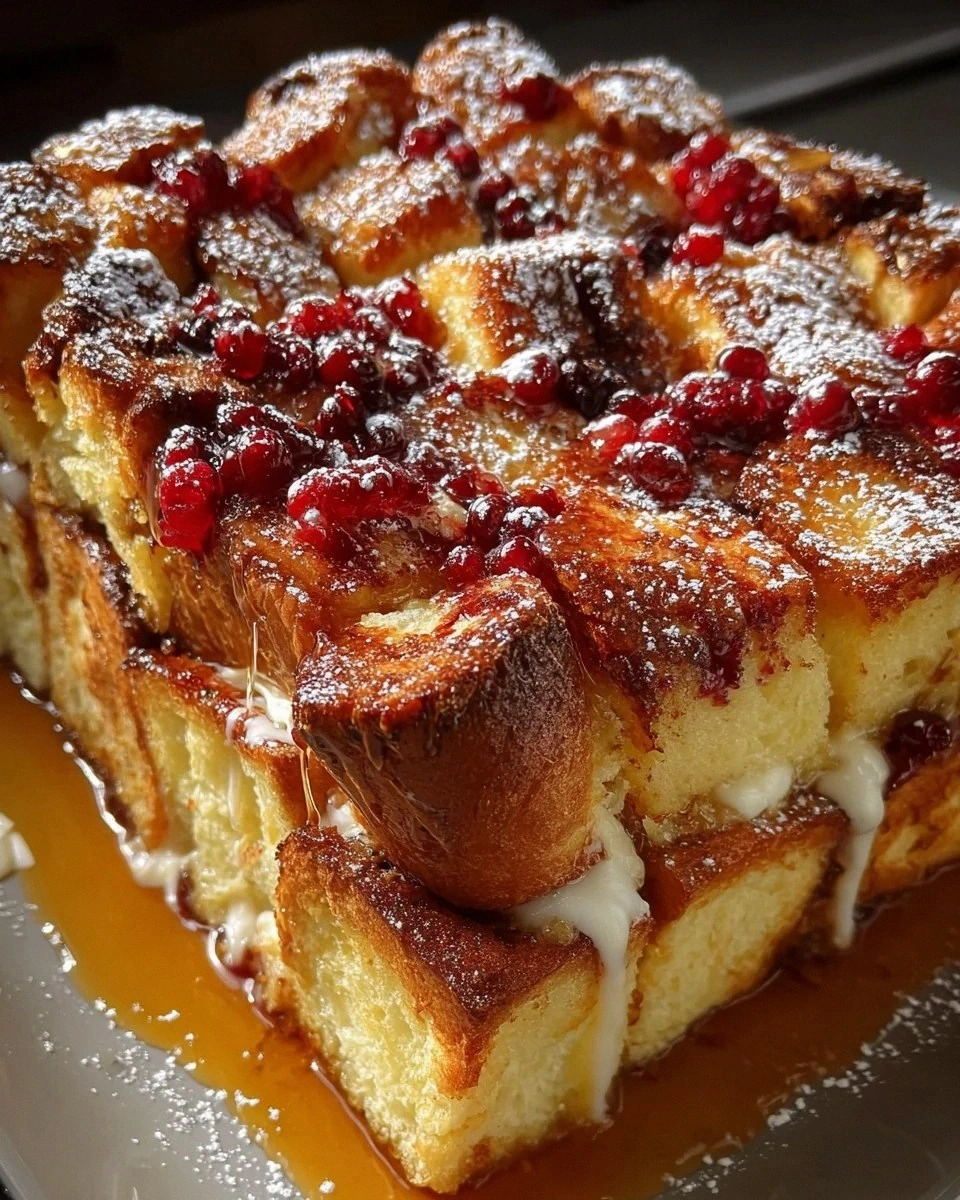
Now, let’s talk senses. The moment the casserole slides out of the oven, the kitchen is flooded with a buttery perfume that whispers “comfort” while a warm cinnamon breeze sweeps across the room. The surface shatters with a crisp that reminds you of fresh‑baked croissants, yet the interior stays as soft and indulgent as a cloud made of custard. When you bite, the tang of the sourdough cuts through the sweet, creamy custard, while bursts of mixed berries explode like fireworks, each pop delivering a bright, citrusy zing from lemon zest that balances the richness. The texture dance—crunchy edges, chewy bread, silky sauce—creates a symphony that makes your taste buds do a happy jig.
What sets this version apart from the sea of “French toast bake” recipes littering the internet? First, I’m using genuine sourdough, not that bland white bread that sags under the weight of the custard. Second, I’ve introduced a double‑cream base—whole milk plus heavy cream—for a custard that’s both light and decadently rich. Third, the berry‑lemon compote is cooked just enough to stay bright and juicy, not mushy, and it’s layered on top for a gorgeous glaze that doubles as a sauce. Most recipes forget the importance of a proper soak, resulting in a soggy mess; I’ve mastered the soak‑time ratio so each cube absorbs the perfect amount of custard without turning into a soggy sponge.
And here’s the kicker: I’m going to reveal a technique that most home cooks overlook—a quick blast of high heat at the end of baking that creates a caramelized crust without burning the interior. Trust me, this little secret will have you bragging to anyone who’ll listen that you’ve cracked the “perfect French toast casserole” code. I dare you to taste this and not go back for seconds. Let me walk you through every single step — by the end, you’ll wonder how you ever made it any other way.
What Makes This Version Stand Out
- Tangy Base: Using sourdough gives the casserole a subtle sour note that cuts through the sweetness, creating a balanced flavor profile that feels sophisticated yet homey.
- Creamy Custard: The blend of whole milk and heavy cream yields a custard that’s silkier than silk, coating each bread cube like a luxurious blanket.
- Berry Burst: Fresh or frozen mixed berries are tossed in a quick lemon‑infused compote, delivering bright acidity that lifts the entire dish.
- Crisp Top: A final high‑heat blast creates a caramelized crust that shatters like thin ice, giving you that coveted crunch without drying the interior.
- Make‑Ahead Friendly: Assemble the night before, refrigerate, and bake in the morning—perfect for brunch crowds or lazy weekends.
- Visual Wow Factor: The golden‑brown top dotted with ruby‑red berries looks stunning on any brunch table, making it Instagram‑ready without the effort.
Inside the Ingredient List
The Flavor Base
Sourdough bread: The star ingredient! This tangy bread holds its shape and offers incredible flavor, giving your casserole a delightful chewiness. If you skip the sourdough, you’ll lose that signature bite and end up with a bland, mushy mess. Look for a loaf with a firm crust and an open crumb; the better the crumb, the more surface area to soak up the custard. For a gluten‑free twist, try a sturdy gluten‑free sourdough, but be aware the texture will change slightly.
Large eggs: They provide the rich custard base that brings the whole dish together, binding the bread and soaking in all that delicious goodness. Missing the eggs means your casserole won’t set properly and will slide off the plate like a wet pancake. For a richer custard, use farm‑fresh eggs; they have higher fat content and will give a silkier mouthfeel.
Whole milk: Adds creaminess to the custard, making every bite velvety smooth. Using skim milk will thin out the custard, resulting in a watery texture that never fully sets. If you’re dairy‑intolerant, a 2% oat milk can substitute without sacrificing too much richness.
Heavy cream: This is where the indulgence comes in! It makes the casserole luxuriously rich and creamy. Skipping the cream for all‑milk will produce a custard that’s more like a pudding than a custard, lacking that buttery mouthfeel.
The Sweet Symphony
Granulated sugar: Sweetens the custard, balancing flavors and making the whole dish feel like a treat. Too little sugar and the tang of the sourdough will dominate; too much and you’ll mask the nuanced flavors. Use fine granulated sugar for even dissolution.
Vanilla extract: A dash of this brings a warm, inviting aroma and enhances the sweetness of the dish. Real vanilla beans can be used for an extra layer of complexity, but a good quality pure extract works just fine.
Ground cinnamon: This spice adds just the right hint of warmth and coziness, making it feel like a Sunday morning at Grandma’s. Freshly ground cinnamon is more aromatic than pre‑ground, so give it a quick grind in a mortar for maximum flavor.
Ground nutmeg: Just a pinch adds sophistication and a hint of the exotic, uplifting the flavor profile. Nutmeg is potent; a little goes a long way, so don’t overdo it unless you love the spice.
Salt: Essential for enhancing the flavors and creating a well‑rounded taste in sweet dishes. Skipping salt is a common mistake that leaves the custard flat and dull.
The Unexpected Star
Unsalted butter: For greasing the baking dish, ensuring that tempting golden crust doesn’t stick. Butter also adds a subtle richness to the bottom of the casserole. If you’re feeling adventurous, melt a tablespoon and brush it over the top before baking for extra crispness.
Mixed berries: Fresh or frozen, they bring a burst of color and flavor! Feel free to mix it up with strawberries, blueberries, or raspberries. The berries also provide antioxidants and a natural sweetness that pairs perfectly with the lemon zest.
Lemon juice and lemon zest: Brighten up the berry compote with a refreshing zing. The acidity balances the sugar and cuts through the richness of the custard, while the zest adds aromatic oils that perfume the entire dish.
Water: Helps create the perfect sauce consistency for your compote. Too little water and the compote will be too thick, sticking to the berries; too much and it will become a watery glaze.
The Final Flourish
Powdered sugar and maple syrup: Optional garnishes that add sweetness and an extra special touch when serving. Dusting powdered sugar creates a snow‑like finish, while a drizzle of maple syrup adds a caramel note that ties the whole dish together.
Everything's prepped? Good. Let's get into the real action...
The Method — Step by Step
Start by preheating your oven to 350°F (175°C). While the oven warms, generously butter a 9‑inch square baking dish, making sure every corner is coated so the crust releases easily. The butter not only prevents sticking but also adds a subtle richness to the bottom of the casserole.
Slice the sourdough into 1‑inch cubes. If the loaf is a day old, it will hold its shape better; if it’s fresh, toast the cubes lightly for 5 minutes on a baking sheet to firm them up. This step ensures the bread won’t turn to mush when soaked.
In a large mixing bowl, whisk together the large eggs, whole milk, heavy cream, granulated sugar, vanilla extract, ground cinnamon, ground nutmeg, and salt. Whisk until the mixture is smooth and slightly frothy—this aerates the custard, giving it a light texture once baked.
Gently fold the sourdough cubes into the custard, making sure each piece is fully submerged. Let the mixture sit for 10‑12 minutes, allowing the bread to soak up the custard without becoming overly saturated. Okay, ready for the game‑changer? After soaking, use a slotted spoon to transfer the cubes to the prepared baking dish, letting excess liquid drain back into the bowl.
Now, for the berry compote: combine mixed berries, lemon juice, lemon zest, water, and a tablespoon of granulated sugar in a small saucepan. Bring to a gentle simmer over medium heat, stirring occasionally. Cook until the berries release their juices and the mixture thickens slightly, about 5‑7 minutes.
Kitchen Hack: Add a splash of lemon juice at the very end of cooking to preserve the bright color of the berries.Spread the berry compote evenly over the soaked bread cubes. The compote will act as a glaze that caramelizes during baking, creating pockets of juicy fruit throughout the casserole. If you prefer a more pronounced fruit layer, drizzle a little extra compote on top after baking.
Cover the dish loosely with aluminum foil and bake for 25 minutes. The foil traps steam, ensuring the custard sets without drying out. After 25 minutes, remove the foil and increase the oven temperature to 425°F (220°C) for a final 10‑12 minutes. This high‑heat blast creates that coveted crunchy crust that shatters like thin ice when you cut into it.
Watch Out: Keep a close eye on the top during the high‑heat phase; if the edges start to darken too quickly, tent the casserole with foil again to prevent burning while still achieving a crisp top.
When the edges are pulling away from the sides of the dish and the top is a deep golden‑brown, the casserole is ready. Let it rest for 5 minutes before serving; this allows the custard to firm up a bit, making slicing cleaner.
Finish with a dusting of powdered sugar and a generous drizzle of maple syrup, if desired. Serve warm, perhaps with an extra spoonful of fresh berries on the side. And now the fun part. Grab a fork, take that first bite, and let the flavors explode—trust me, you’ll be back for seconds.
Insider Tricks for Flawless Results
The Temperature Rule Nobody Follows
Most home cooks bake at a steady 350°F and wonder why the top never gets that perfect crunch. The secret is a two‑stage bake: start low to set the custard, then finish high to caramelize the sugars. This method creates a contrast between a soft interior and a crackly crust that’s pure bliss. A friend tried skipping the high‑heat finish once—let’s just say the result was a soggy pancake masquerading as a casserole.
Why Your Nose Knows Best
Don’t rely solely on timers; trust your nose. When the aroma shifts from milky sweet to a buttery caramel scent, you’re nearing the perfect finish. If you detect a hint of burnt sugar, pull the casserole out immediately and cover it with foil. Your olfactory senses are the ultimate gauge for doneness.
The 5‑Minute Rest That Changes Everything
After the oven, let the casserole sit uncovered for five minutes. This short rest lets the custard settle, making each slice hold together without crumbling. Skipping this step is a common mistake that leads to a mushy mess on the plate.
Berry Compote Consistency Hack
If you like a thicker compote, add a teaspoon of cornstarch slurry (cornstarch mixed with cold water) during the last minute of simmering. This will give the sauce a glossy, jam‑like texture that clings to each bite. Just be careful not to over‑thicken; you want it to drizzle, not glue.
Butter‑Infused Crust
For an extra‑rich crust, melt a tablespoon of butter with a pinch of cinnamon and brush it over the top just before the final high‑heat blast. The butter caramelizes, creating a glossy, fragrant finish that’s impossible to resist.
Creative Twists and Variations
This recipe is a playground. Here are some of my favorite ways to switch things up:
Chocolate Hazelnut Dream
Swap half of the mixed berries for chopped toasted hazelnuts and drizzle a generous spoonful of Nutella over the top before baking. The nutty chocolate adds depth and turns the dish into a decadent brunch treat.
Apple Cinnamon Harvest
Replace the berry compote with a spiced apple compote—cook diced apples with cinnamon, a splash of apple cider, and a pinch of clove. This variation is perfect for autumn mornings when you crave warm orchard flavors.
Savory Spin
Omit the sugar and vanilla, and add shredded sharp cheddar, cooked bacon bits, and a dash of smoked paprika to the custard. Top with a thin layer of grated Parmesan before the final high‑heat blast for a savory brunch casserole that’ll wow any crowd.
Tropical Twist
Use diced mango, pineapple, and shredded coconut in place of berries, and add a splash of coconut milk to the custard. Finish with a drizzle of honey and a sprinkle of toasted coconut flakes for a vacation‑in‑your‑mouth experience.
Vegan Velvet
Replace the eggs with a blend of silken tofu and flax “egg” (1 tbsp ground flaxseed + 3 tbsp water per egg). Use oat milk and coconut cream instead of dairy, and swap butter for coconut oil. The result is a plant‑based version that still delivers on texture and flavor.
Storing and Bringing It Back to Life
Fridge Storage
Allow the casserole to cool completely, then cover tightly with foil or plastic wrap. It will keep in the refrigerator for up to three days. When reheating, preheat the oven to 325°F (165°C), add a splash of milk or water to the edges, and bake for 15‑20 minutes until warmed through.
Freezer Friendly
Portion the uncooked, assembled casserole into freezer‑safe containers, then wrap tightly with foil. It freezes beautifully for up to two months. To bake from frozen, increase the baking time by 15‑20 minutes and start at 350°F, finishing with the high‑heat blast for that coveted crust.
Best Reheating Method
For the ultimate leftover experience, reheat a slice in a hot skillet over medium‑low heat, adding a teaspoon of butter and a splash of water. Cover the skillet for two minutes to steam the interior, then uncover to let the bottom crisp. This method revives the crunchy top and creamy interior without drying out the custard.