Love this? Pin it for later! 📌
Why This Recipe Works
- Build-ahead convenience: Make a double batch on Sunday and freeze flat in zip bags for space-saving storage.
- Thaw-and-serve in minutes: Run the frozen block under warm water for 30 seconds, then warm gently while the kettle boils for tea.
- Customizable vegetables: Swap in whatever’s lurking in the crisper—parsnips, turnips, even a handful of spinach.
- Noodle integrity: Par-cook egg noodles separately so they don’t bloat or disintegrate after freezing.
- Layered flavor base: Briefly caramelizing the mirepoix adds depth without extra sodium.
- Bright finish: Fresh lemon and dill wake up the broth right before serving, chasing away “canned soup” vibes.
- Protein punch: Two pounds of bone-in thighs yield both rich stock and generous shredded meat for true comfort.
Ingredients You'll Need
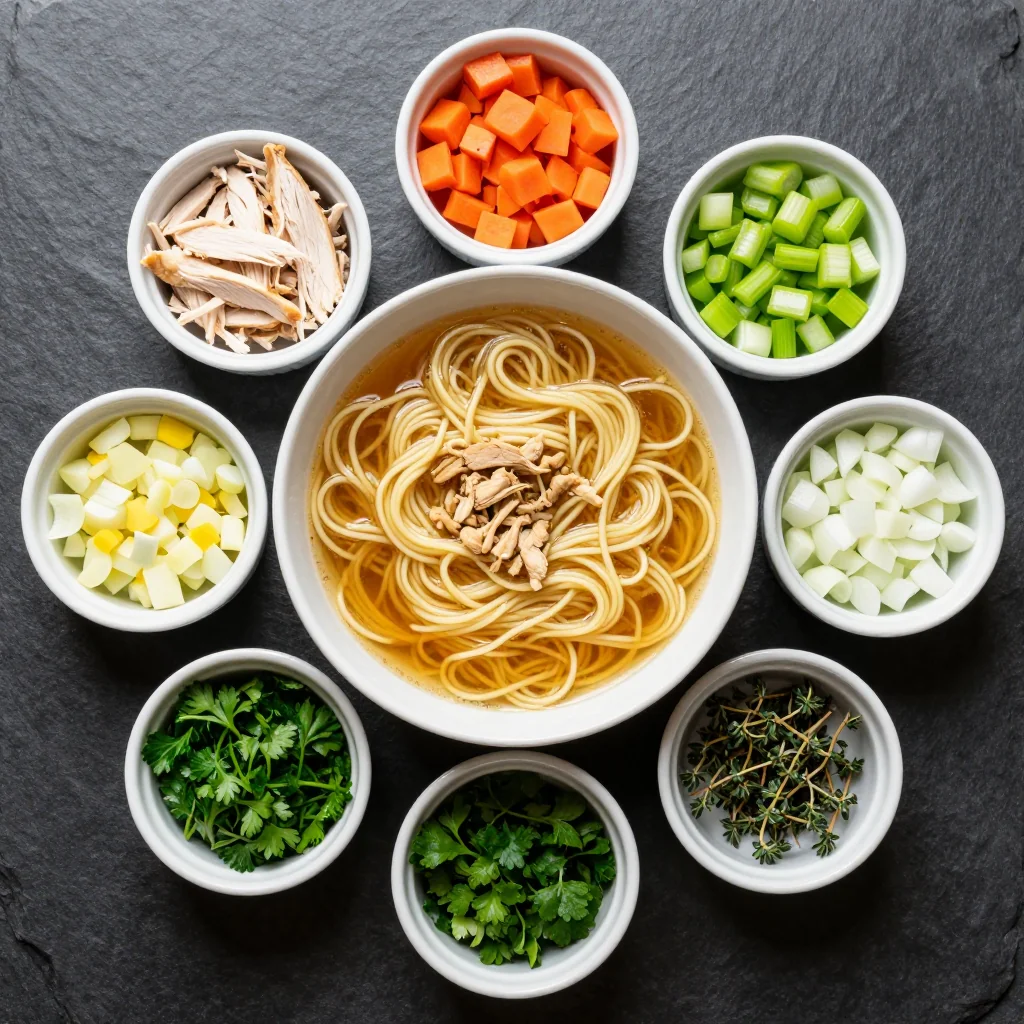
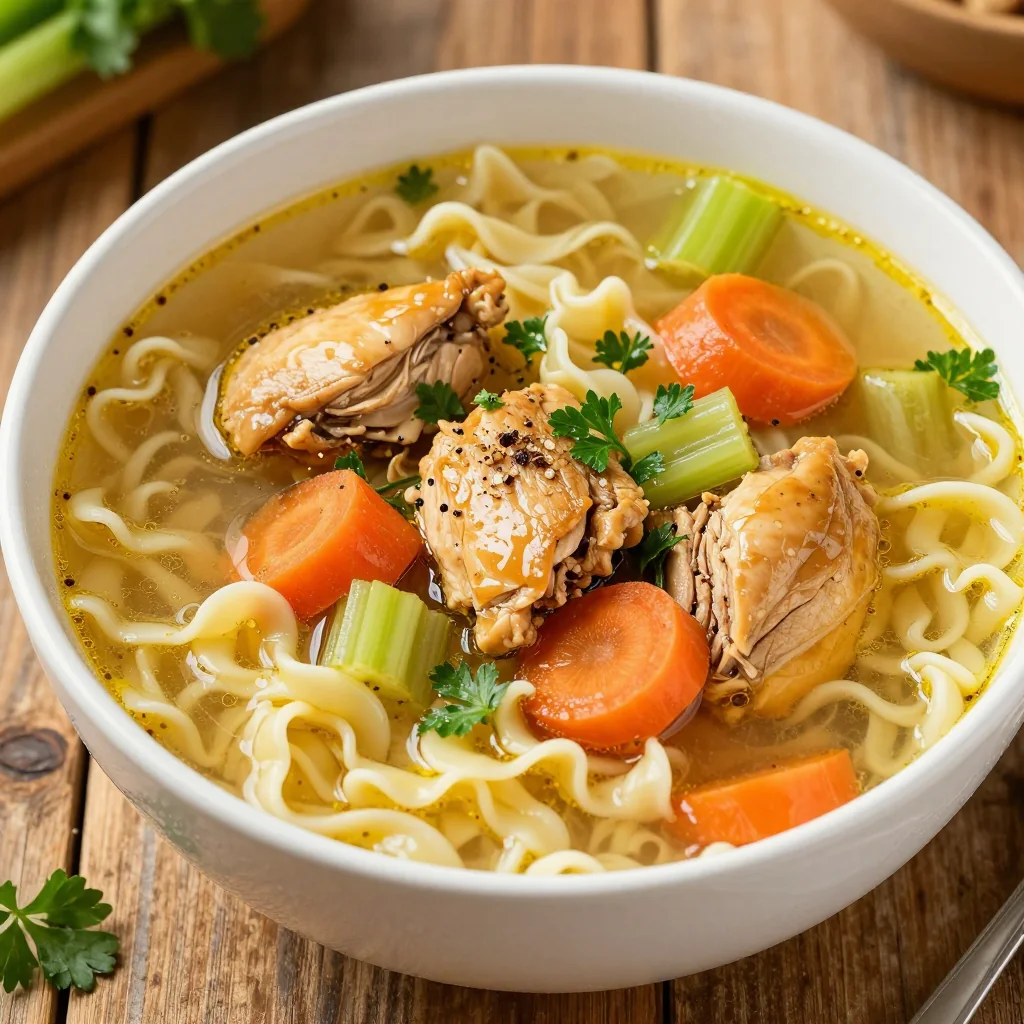
For the most soul-soothing results, choose bone-in, skin-on chicken thighs. The bones contribute collagen that transforms into silky body, while the skin renders a touch of flavorful schmaltz that you can leave in for richness or skim off if you prefer a clearer broth. Carrots, celery, and onion form the classic aromatic trinity; cutting them on the small side ensures they warm through quickly when the soup is reheated from frozen. Parsnip is optional but adds gentle sweetness that kids rarely notice yet keeps the broth from tasting one-note.
Egg noodles are traditional, but I favor wide “dumpling” style noodles because they stay pleasantly chewy after freezing. Par-cooking them two minutes shy of package directions prevents blow-outs. If you need a gluten-free option, swap in cooked rice or a small-shaped gluten-free pasta added during reheating. Fresh dill is worth seeking out; its grassy perfume announces “made from scratch” the moment the bowl hits the table. Dried dill will work in a pinch—use one-third the amount and add with the stock so it rehydrates fully.
Lastly, keep a couple of lemons on standby. A quick squeeze just before serving lifts the whole pot, balancing the savory elements and cutting through congestion in the most comforting way. If you’re cooking for someone with a delicate stomach, add the lemon to individual bowls rather than the entire batch.
How to Make Freezer Friendly Chicken Noodle Soup for Sick Days
Brown the chicken
Pat 2 lb bone-in, skin-on chicken thighs dry and season with 1 tsp kosher salt and ½ tsp black pepper. Heat 1 Tbsp olive oil in a heavy Dutch oven over medium-high. Add thighs skin-side down; sear 4 minutes without moving to render fat and create fond. Flip and cook 2 more minutes. Transfer to a plate. (Chicken will finish cooking in the broth.)
Build the base
Lower heat to medium. Spoon off all but 2 Tbsp of the rendered fat. Add 1 cup diced onion, 1 cup diced carrot, ¾ cup diced celery, and ½ cup diced parsnip (optional). Sauté 6 minutes, scraping browned bits, until vegetables take on light color. Stir in 2 minced garlic cloves and 1 tsp dried thyme; cook 1 minute.
Deglaze and simmer
Pour in ½ cup dry white wine (or additional broth) and simmer 2 minutes to evaporate alcohol. Return chicken and any juices to the pot. Add 6 cups low-sodium chicken stock and 2 bay leaves. Bring to a gentle boil, reduce to low, cover partially, and simmer 25 minutes until chicken is very tender.
Shred the meat
Transfer chicken to a cutting board. Discard skin and bones; shred meat into bite-size pieces. Skim excess fat from broth if desired. Return shredded chicken to the pot.
Cook the noodles separately
Bring a medium saucepan of salted water to a boil. Add 6 oz wide egg noodles and cook 2 minutes less than package directions. Drain, rinse under cold water to stop cooking, and toss with 1 tsp oil to prevent sticking. Set aside.
Season and cool
Taste broth; add up to 1 tsp additional salt and ½ tsp pepper depending on stock used. Remove bay leaves. Let soup cool 20 minutes off heat; this prevents condensation in storage containers.
Portion for freezer
Ladle 1½ cups cooked noodles into each labeled quart-size freezer bag. Top with 2 cups broth mixture. Press out air, seal, and lay flat on a rimmed baking sheet. Freeze 2 hours until solid, then stack vertically like books to save space.
Reheat and garnish
To serve, run the frozen soup block under warm water 30 seconds to loosen. Transfer to a small pot, cover, and warm over medium-low 8–10 minutes, stirring occasionally. Finish with 1 Tbsp chopped fresh dill and a squeeze of lemon per bowl.
Expert Tips
Flash-freeze noodles separately
Spread par-cooked noodles on a parchment-lined tray, freeze 20 minutes, then portion. This keeps them from turning into one solid brick and makes reheating faster.
Skim smart
Chill the finished broth overnight; lift off the solidified fat if you want a lighter soup, or leave a thin layer for extra flavor and mouthfeel.
Label with masking tape
Write contents, date, and reheating instructions right on the bag. After three months the flavor fades, so rotate stock and use older bags first.
Reheat low and slow
High heat can turn chicken stringy. A gentle simmer preserves tenderness and keeps noodles from fraying.
Flavored ice cubes
Freeze extra lemon juice and dill in an ice-cube tray; drop a cube into each portion for an instant brightness boost.
Double the vegetables
If you’re feeding cold-fighting troops, bulk up on carrots and celery; they add natural sweetness and vitamin A without extra salt.
Variations to Try
-
Asian-inspired: Swap thyme for 1-inch grated ginger, finish with a splash of low-sodium soy sauce and sesame oil. Use ramen or rice noodles.
-
Creamy version: Stir ½ cup half-and-half into the thawed soup during the last 2 minutes of reheating for a velvety texture.
-
Spicy sinus-clearer: Add ¼ tsp cayenne or a diced jalapeño with the garlic; finish with a squeeze of lime instead of lemon.
-
Whole-grain boost: Substitute farro or barley for noodles; cook separately until just al dente so grains stay pleasantly chewy after thawing.
-
Vegetarian pivot: Replace chicken with 2 cans drained chickpeas and use vegetable stock; add 1 tsp white miso for umami depth.
Storage Tips
Proper packaging is the difference between soup that tastes like tomorrow’s take-out and one that could pass for just-simmered. Let the soup cool completely—no steam—before ladling into sturdy freezer bags. Quart-size bags hold the perfect single-meal portion for two hungry adults or three lighter appetites. Lay each bag flat on a rimmed sheet pan until solid; once frozen, stand them vertically like files to maximize every cubic inch of freezer real estate. If you prefer rigid containers, leave 1 inch of headspace for expansion.
Store up to three months for peak flavor, though food safety guidelines allow longer. Label with blue painter’s tape so the ink doesn’t smear. When reheating, thaw overnight in the refrigerator if possible, or use the quick-water method: submerge the sealed bag in a bowl of cool water for 20 minutes, changing water once, then transfer to a pot and warm gently to 165 °F. Add a splash of water or broth if the soup thickens too much. Once reheated, do not refreeze; leftovers will keep three days in the fridge.
Frequently Asked Questions
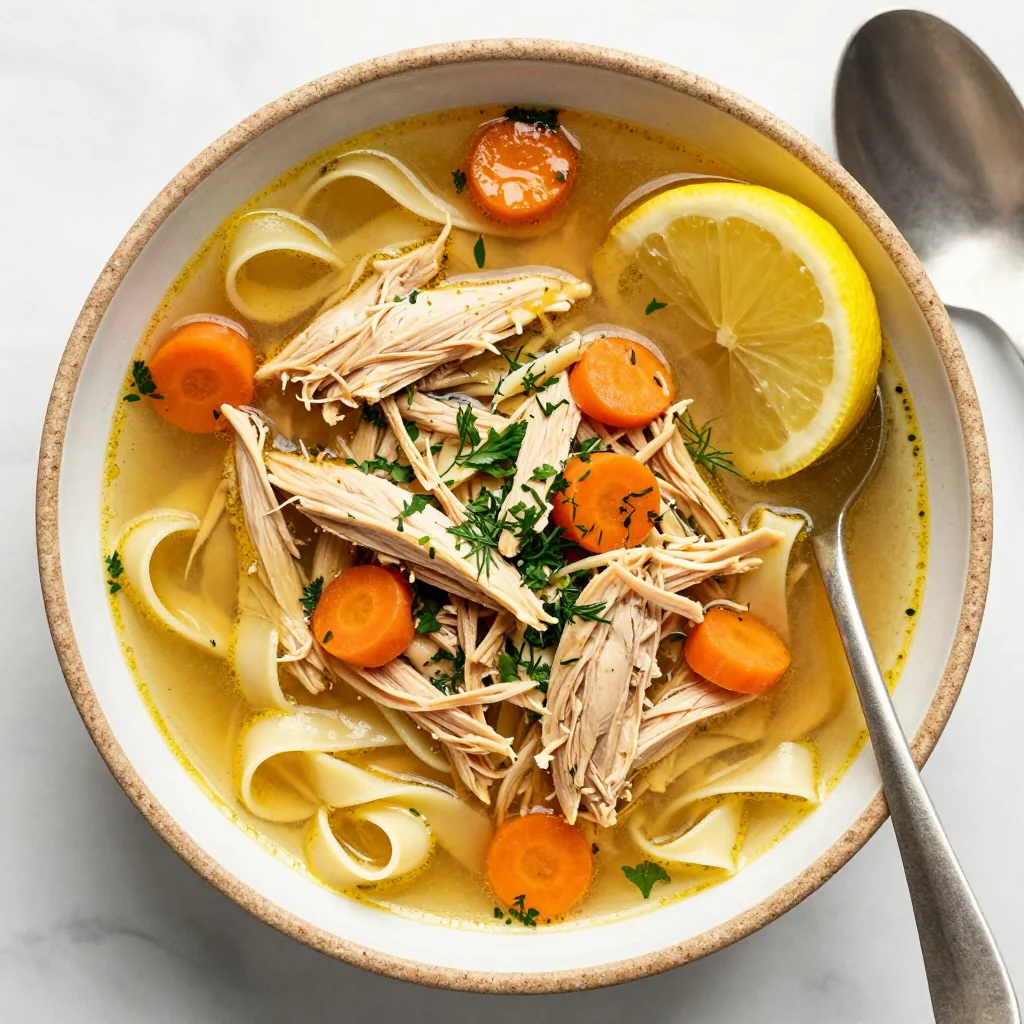
Freezer Friendly Chicken Noodle Soup for Sick Days
Ingredients
Instructions
- Brown chicken: Season thighs with 1 tsp salt and ½ tsp pepper. Heat oil in Dutch oven; sear 4 min per side. Remove.
- Sauté vegetables: In rendered fat, cook onion, carrot, celery, and parsnip 6 min. Add garlic and thyme; cook 1 min.
- Deglaze: Pour in wine; simmer 2 min, scraping bits.
- Simmer soup: Return chicken, add stock and bay leaves. Cover partially; simmer 25 min.
- Shred meat: Discard skin/bones; shred meat. Skim fat if desired.
- Cook noodles: Boil noodles 2 min shy of package; drain, rinse, oil lightly.
- Season & cool: Salt/pepper broth; remove bay leaves. Cool 20 min.
- Portion & freeze: Divide noodles among bags, top with broth. Seal, lay flat, freeze up to 3 months.
- Reheat: Thaw under warm water 30 sec; warm gently in pot. Stir in dill and lemon juice just before serving.
Recipe Notes
For a clearer broth, refrigerate overnight and lift off the solidified fat. Add a pinch of turmeric for golden color and extra anti-inflammatory boost.