Love this? Pin it for later! 📌
Last Tuesday at 6:17 p.m. I found myself staring into the abyss of my produce drawer: three wrinkled beets that had seen better days, a handful of baby potatoes sprouting optimistic eyes, and a single massive rutabaga I'd impulse-bought in October because it looked "fun." Take-out menus beckoned from the junk drawer, but something about the golden late-winter light streaming through my kitchen window made me want to coax magic from these humble stragglers. Forty-five minutes later I was pulling a sheet pan of glistening, jewel-toned vegetables from the oven, their edges blistered and sweet, the whole house smelling like I'd planned dinner all along. My teenager—who normally greets vegetables with the enthusiasm of a tax audit—walked by, snagged a cube of roasted sweet potato, and actually smiled. "Tastes like candy," she mumbled, reaching for a second piece before I'd even set the pan on the trivet.
That, friends, is the quiet power of high-heat roasting. It turns pantry clean-out into a celebration, rescues "past-prime" produce, and delivers fiber, potassium, and beta-carotene in a form that even picky palates crave. Whether you're feeding a vegetarian table, meal-prepping for the week, or simply trying to waste less food, this flexible formula will become your culinary safety net.
Why This Recipe Works
- One-pan wonder: Everything cooks together—no babysitting multiple pots.
- Zero waste: Uses up the odds and ends hiding in your crisper.
- Meal-prep friendly: Tastes even better the next day in grain bowls or salads.
- Naturally gluten-free & vegan: Crowd-pleasing without labels.
- Customizable: Swap in whatever roots you have—quantities are forgiving.
- Crispy edges, creamy centers: The high-heat convection trick that delivers both textures.
- Budget hero: Turns dollar-a-pound produce into something that feels gourmet.
Ingredients You'll Need
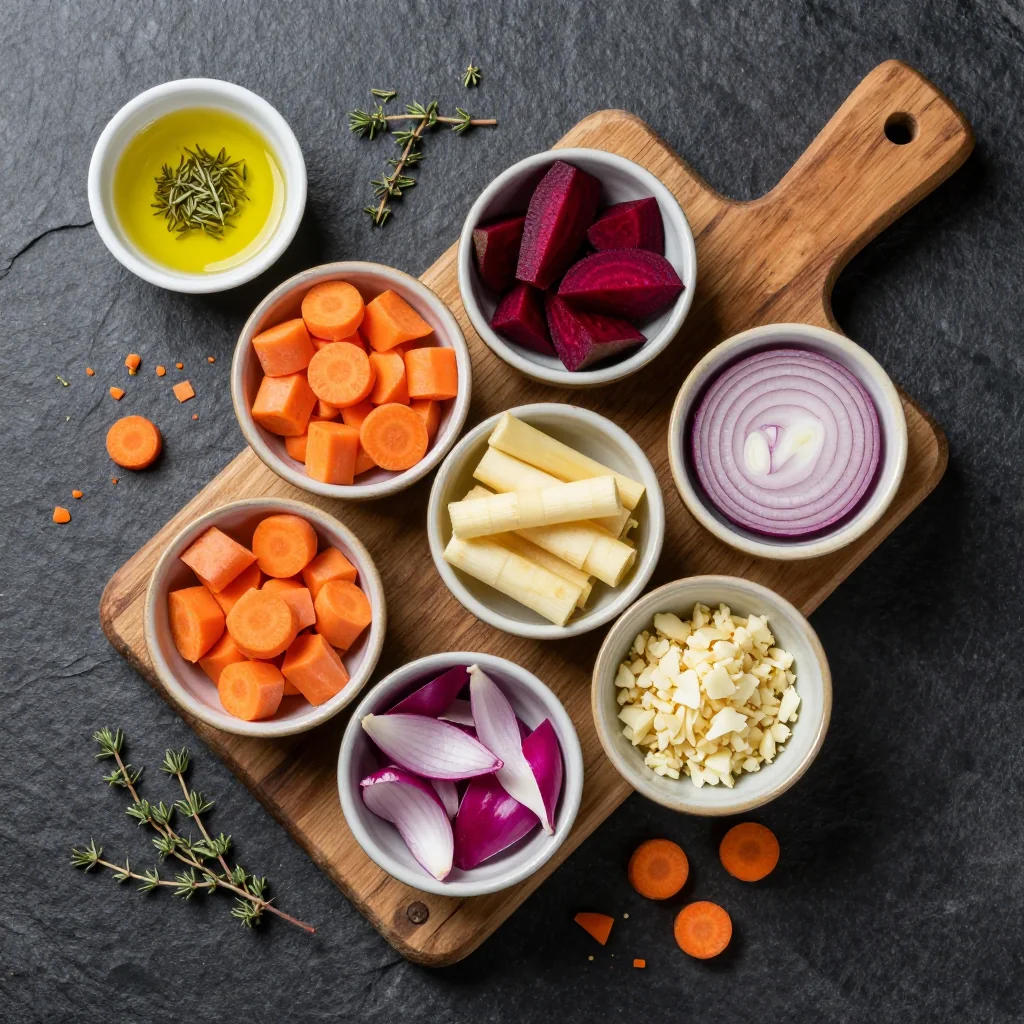
Before we dive into the method, let's talk produce shopping strategy. Root vegetables are the marathon runners of the produce world—sturdy, reliable, and happy to hang out in a cool dark pantry for weeks. That said, a few buying pointers will elevate your final roast from "serviceable side" to "star of the plate."
Beets: Look for firm, unblemished skins and crisp greens if still attached. The greens are edible too—wash, chop, and add them to the sheet pan for the final 8 minutes for a nutrient bonus. Golden beets bleed less and taste milder than their ruby cousins, making them perfect for beet skeptics.
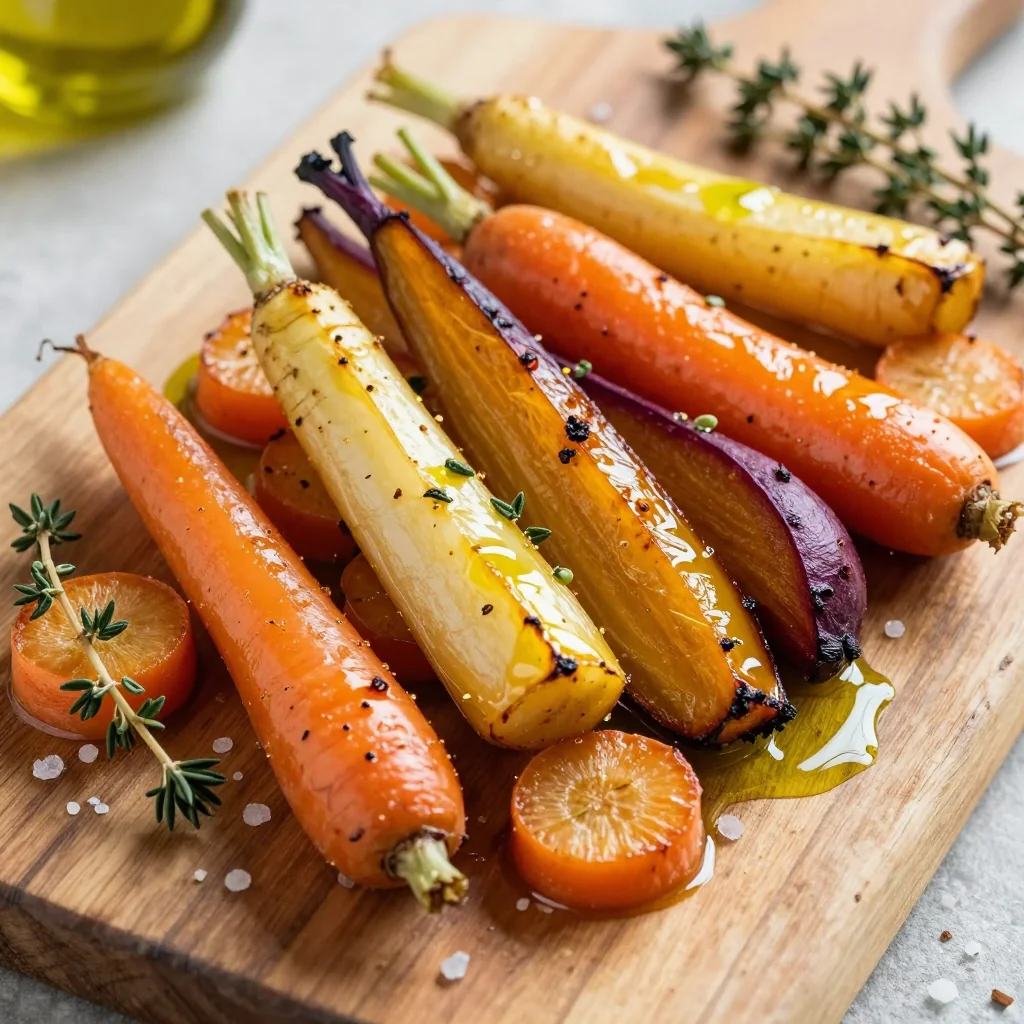
Carrots: Bunches with tops still on stay plump longer. If your carrots have gone limp, revive them in ice water for 30 minutes before peeling. Rainbow carrots aren't just photogenic—yellow and white varieties taste slightly sweeter and won't stain your cutting board.
Parsnips: Choose small-to-medium specimens; monster parsnips can be woody in the core. The sweetest, nuttiest flavor emerges after the first frost, so winter farmers-market parsnips are gold. Peel only if the skin is thick or blemished—otherwise a good scrub preserves nutrients.
Sweet Potatoes: Jewel and Garnet varieties roast up creamy and sweet, while Japanese purple-fleshed types stay firmer and earthier. Store them loose, not in plastic, to prevent molding. Pro tip: roast a few extra to blend into tomorrow's pancake batter.
Turnips & Rutabaga: Often confused, turnips are smaller with purple-tinged tops and a peppery bite that mellows beautifully in the oven. Rutabagas (yellow-tinged flesh, waxy skin) are larger and sweeter. Both caramelize like champs and cost pennies per pound.
Herbs & Aromatics: Woody herbs—rosemary, thyme, sage—hold up to high heat. Save delicate parsley or cilantro for finishing. A whisper of maple syrup or balsamic in the final 10 minutes glazes the vegetables without burning.
How to Make Healthy Roasted Root Vegetables for Pantry Clean Out
Heat & prep your pan
Place a rimmed 18×13-inch sheet pan (half-sheet size) on the middle oven rack before turning on the heat. Preheat to 425 °F convection or 450 °F conventional. A screaming-hot pan jump-starts caramelization and prevents sticking without excess oil.
Wash, peel, and cube uniformly
Aim for ¾-inch dice—small enough to cook through in 30 minutes, large enough to stay creamy inside. Keep beets separate until tossed with oil to prevent Technicolor bleeding. Place each vegetable in its own bowl for seasoning control.
Oil and season strategically
Use 1 tablespoon extra-virgin olive oil per pound of vegetables. Add ½ teaspoon kosher salt and ¼ teaspoon freshly ground black pepper per pound. Toss until every cube glistens; oil is the conductor that transfers heat and promotes browning.
Arrange in a single layer—no crowding
Use two pans if necessary. Overlapping pieces steam instead of roast, leaving you with sad, pale cubes. Leave ⅛-inch gaps for hot air to circulate and edges to blister.
Roast undisturbed for 20 minutes
Resist the urge to flip early; the bottoms need uninterrupted contact with hot metal to develop those coveted dark edges. Set a timer and walk away—your future self will thank you.
Flip and rotate pans
Use a thin metal spatula to scrape and release caramelized bits. Rotate pans front-to-back and switch racks if using two. Add quick-cooking veg like bell pepper or zucchini at this stage so they don't dissolve into mush.
Finish with flair
Return to oven for 10–15 minutes more, until a cake tester slides into a potato with gentle resistance. Optional glaze: whisk 1 teaspoon maple syrup with 1 teaspoon balsamic and brush on for the final 5 minutes for a shiny, restaurant-quality sheen.
Rest and garnish
Let the vegetables rest 5 minutes on the pan; steam trapped under the veggies finishes the centers without overcooking exterior. Shower with chopped parsley, citrus zest, toasted nuts, or a crumble of feta for contrast.
Expert Tips
Parboil dense roots for extra creaminess
Drop potatoes or rutabaga into salted boiling water for 4 minutes, drain, rough-up the edges by shaking in the pot, then roast. The fluffy edges become ultra-crispy while the centers stay cloud-soft.
Use convection for even browning
If your oven has a convection setting, reduce temperature by 25 °F and shorten cook time by 10%. The circulating air eliminates hot spots and delivers uniformly blistered edges.
Line with parchment for zero-stick guarantee
While a naked hot pan promotes caramelization, parchment buys insurance against burnt sugar spots—especially helpful if you're glazing with maple or honey.
Season in layers
Salt before oil; salt sticks to the veg, oil seals it in. Add fresh herbs in the last 5 minutes so they perfume without incinerating. Finish with flaky salt for crunchy pops of salinity.
Mix sweet and savory for craveability
Combine naturally sweet roots (carrot, beet, sweet potato) with earthy ones (parsnip, turnip) to keep every bite interesting. A sprinkle of smoked paprika or curry powder bridges the flavors.
Roast extra for the week
Double the batch. Cool completely, refrigerate in glass containers, then reheat in a dry skillet for 5 minutes—crisp edges return, unlike the microwave which steams them limp.
Variations to Try
-
Mediterranean twist: Swap olive oil for avocado oil, add 1 teaspoon each dried oregano and lemon zest. Finish with crumbled feta, kalamata olives, and a squeeze of fresh lemon.
-
Asian-inspired glaze: Replace salt with 1 tablespoon low-sodium tamari and 1 teaspoon toasted sesame oil. Toss with 1 tablespoon miso mixed into the oil. Garnish with toasted sesame seeds and scallions.
-
Spicy Southwest: Dust vegetables with 1 teaspoon chili powder, ½ teaspoon ground cumin, and a pinch of cayenne. Add corn kernels and black beans to the pan for the final 10 minutes for a complete vegetarian taco filling.
-
Harvest maple: Whisk 1 tablespoon pure maple syrup with ½ teaspoon Dijon, ½ teaspoon apple-cider vinegar, and a pinch of cinnamon. Brush on during the last 5 minutes for a glossy, holiday-worthy finish.
-
Protein-packed: Nestle 1 can drained chickpeas or cubed firm tofu among the vegetables. They'll absorb the rendered juices and crisp into irresistible nuggets.
-
Creamy garlic parmesan: During the last 8 minutes, scatter 2 tablespoons grated Parmesan and 1 tablespoon minced garlic over the vegetables. The cheese melts into lacy crisps and the garlic perfumes without burning.
Storage Tips
Refrigerator: Cool completely, transfer to airtight glass containers, and refrigerate up to 5 days. For best texture, reheat in a 400 °F oven or skillet rather than the microwave.
Freezer: Spread cooled vegetables in a single layer on a parchment-lined sheet pan; freeze until solid, then transfer to freezer bags. Keeps 3 months. Thaw overnight in the fridge or reheat directly from frozen in a 425 °F oven for 15 minutes.
Make-ahead: Cube and season vegetables up to 24 hours ahead; store covered in the fridge. When ready to cook, spread on the hot pan and add 2–3 extra minutes to the initial roast.
Repurposing: Blend leftovers into creamy soup with broth and a splash of coconut milk; mash with white beans for veggie burgers; fold into omelets; or toss with cooked farro, arugula, and lemon-tahini dressing for a powerhouse lunch bowl.
Frequently Asked Questions
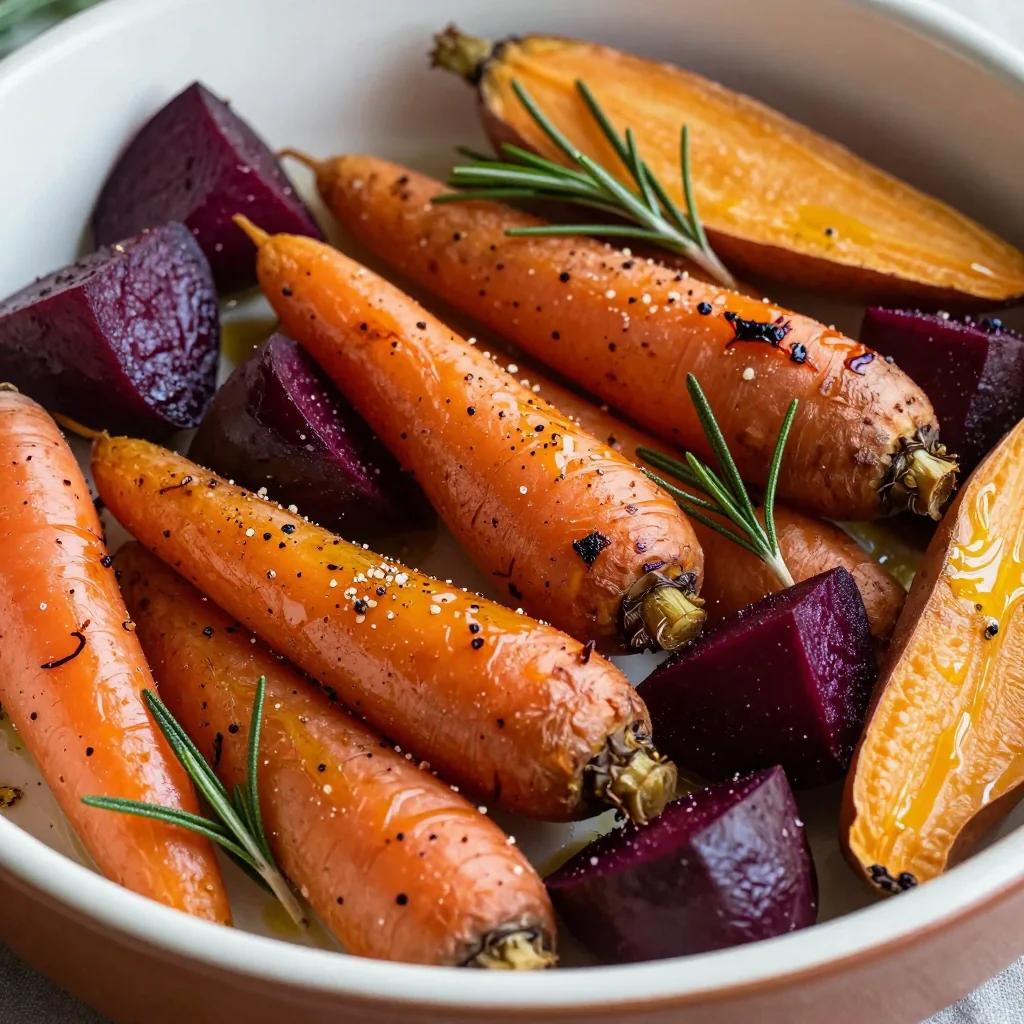
Healthy Roasted Root Vegetables for Pantry Clean Out
Ingredients
Instructions
- Preheat & heat pan: Place rimmed sheet pan on middle rack and preheat oven to 425 °F convection or 450 °F conventional.
- Prep vegetables: Wash, peel, and cube all vegetables to ¾-inch pieces. Keep beets separate to prevent staining.
- Oil and season: In a large bowl, toss vegetables (except beets) with olive oil, salt, and pepper until evenly coated. Repeat with beets in a separate bowl.
- Arrange: Carefully remove hot pan. Spread vegetables in a single layer without crowding. Scatter herb sprigs on top.
- Roast: Bake 20 minutes undisturbed. Flip with a metal spatula, rotate pan, and roast 10–15 minutes more until tender and caramelized.
- Optional glaze: Whisk maple syrup and balsamic; brush on vegetables during final 5 minutes.
- Rest & serve: Let rest 5 minutes on pan. Remove herb stems, transfer to platter, and garnish as desired.
Recipe Notes
For mixed cook times, start potatoes and beets first, add carrots and parsnips after 10 minutes, finish with onion wedges at the 20-minute flip. Scale the recipe by using 1 tablespoon oil per pound of vegetables and maintain a single-layer rule.