I was standing in my kitchen, staring at a pot of over‑boiled pasta and a bowl of bland broth that had somehow lost its flavor. My friend, a self‑proclaimed Greek culinary guru, tossed a challenge my way: “Make a soup that feels like a hug and not a health‑check.” I laughed, grabbed a bag of ground lamb, and set the kitchen timer for 45 minutes, determined to prove that I could turn a simple idea into a masterpiece.
The moment the meatballs hit the pan, the air filled with a fragrant swirl of garlic and onions that made my nose do a happy dance. The sizzling sound was a metronome for my excitement, and the aroma was so rich it seemed to seep into the walls of the room. I could almost taste the bright lemon zest and the subtle heat of oregano before the broth even started to bubble. The kitchen became a stage, and I, the chef, was ready to deliver a performance that would leave everyone asking for a second helping.
What sets this Giouvarlakia apart from the countless versions that swirl across the internet is the secret marriage of herbs and the careful balance of acidity. I use a blend of fresh dill, mint, and parsley that gives the meatballs a Mediterranean sparkle, while a splash of white wine adds depth without overpowering the dish. The broth is not just a base; it’s a canvas painted with tomato paste, lemon juice, and a whisper of olive oil, turning each spoonful into a velvety, aromatic experience. My version is hands down the best you’ll ever make at home, and I dare you to taste this and not go back for seconds.
I’ll be honest— I ate half the batch before anyone else got to try it. The rest of the evening was spent sharing stories, swapping cooking fails, and laughing at the way my friends tried to replicate my technique. Picture yourself pulling this out of the oven, the whole kitchen smelling incredible, and knowing that every bite will bring a wave of comfort and delight. Let me walk you through every single step—by the end, you’ll wonder how you ever made it any other way.
What Makes This Version Stand Out
- Taste: The combination of fresh herbs and a splash of white wine creates a depth that feels both rustic and refined. The lemon zest lifts the broth, giving it a bright, almost citrusy finish that balances the richness of the meat. This isn’t just a soup; it’s a flavor journey that starts with a comforting bite and ends with a lingering, savory note.
- Texture: The meatballs are tender and slightly chewy, with a subtle crunch from the breadcrumbs. The broth is silky, not watery, thanks to the careful reduction of tomatoes and the addition of a touch of flour. Every spoonful feels like a hug from the inside out.
- Simplicity: Despite its complex flavor profile, the recipe requires only a handful of ingredients and a few straightforward steps. You can whip this up on a busy weeknight, and the result will still feel like a gourmet meal. It’s the perfect balance between effort and reward.
- Uniqueness: The inclusion of both dill and mint is a nod to authentic Greek tradition, while the optional white wine adds a subtle, sophisticated twist that sets it apart from standard meatball soups.
- Crowd Reaction: Friends and family consistently say this is the first time they’ve had a Greek soup that feels like home. The dish is a conversation starter, and the leftovers are always a hit when re‑heated.
- Make‑ahead Potential: The broth and meatballs keep well in the fridge for up to 48 hours, and they can even be frozen for a quick week‑night dinner. The flavors meld beautifully over time, making this dish a practical yet delicious option.
Inside the Ingredient List
The Flavor Base
Ground lamb and beef are the heart of this soup, offering a robust, savory foundation that is unmistakably Greek. The lamb’s natural fattiness brings richness, while the beef adds a subtle depth that balances the dish. Skipping either protein will alter the flavor profile significantly; the lamb alone will taste too lean, and the beef alone will lack that traditional Mediterranean aroma.
Onion and garlic are the aromatic backbone, releasing a sweet, earthy aroma as they sauté. They’re essential for building the broth’s complexity; if you omit them, the soup will feel flat and unremarkable. For a milder taste, reduce the garlic to two cloves and let the onion do most of the work.
Tomato paste is the secret sauce that gives the broth its deep color and umami punch. It thickens the liquid slightly, creating a mouthfeel that’s both comforting and luxurious. If you can’t find tomato paste, a tablespoon of tomato sauce can be a suitable substitute, but it will dilute the intensity.
The Herb Ensemble
Fresh dill is the star herb, lending a bright, almost citrusy note that cuts through the richness of the meat. It’s a classic Greek herb that pairs beautifully with lamb, and its subtle flavor profile can be missed if you use dried dill. For best results, chop the dill finely to release its oils.
Mint adds a refreshing, cooling counterpoint that balances the dish’s savory elements. It’s a signature ingredient in many Greek soups, providing a burst of freshness that keeps the palate from becoming overwhelmed. If mint is out of season, a pinch of dried mint can suffice, but the flavor will be less vibrant.
Parsley brings a herbaceous brightness and a touch of green color that enhances the visual appeal of the soup. It also contributes a mild, slightly peppery flavor that complements the other herbs. Fresh parsley is preferred; dried parsley can be used in a pinch but will not offer the same aromatic punch.
The Unexpected Star
A splash of white wine introduces a subtle acidity that brightens the broth and adds complexity. The wine’s fruity undertones mingle with the lemon zest, creating a layered flavor profile that feels both sophisticated and comforting. If you’re not comfortable with alcohol, a tablespoon of dry white wine vinegar can provide a similar acidity.
The Final Flourish
Egg, breadcrumbs, and a small amount of flour work together to bind the meat mixture, ensuring the meatballs hold their shape during cooking. The egg adds protein and richness, while the breadcrumbs absorb excess moisture. If you prefer a gluten‑free version, substitute the breadcrumbs with almond flour and increase the amount of flour to maintain the binding.
Olive oil is the finishing touch, added at the end of cooking to enrich the broth and give it a silky sheen. It also helps the herbs’ flavors coat the meatballs evenly. A high‑quality extra virgin olive oil is essential; a lower quality oil will leave a metallic aftertaste.
Everything’s prepped? Good. Let’s get into the real action.
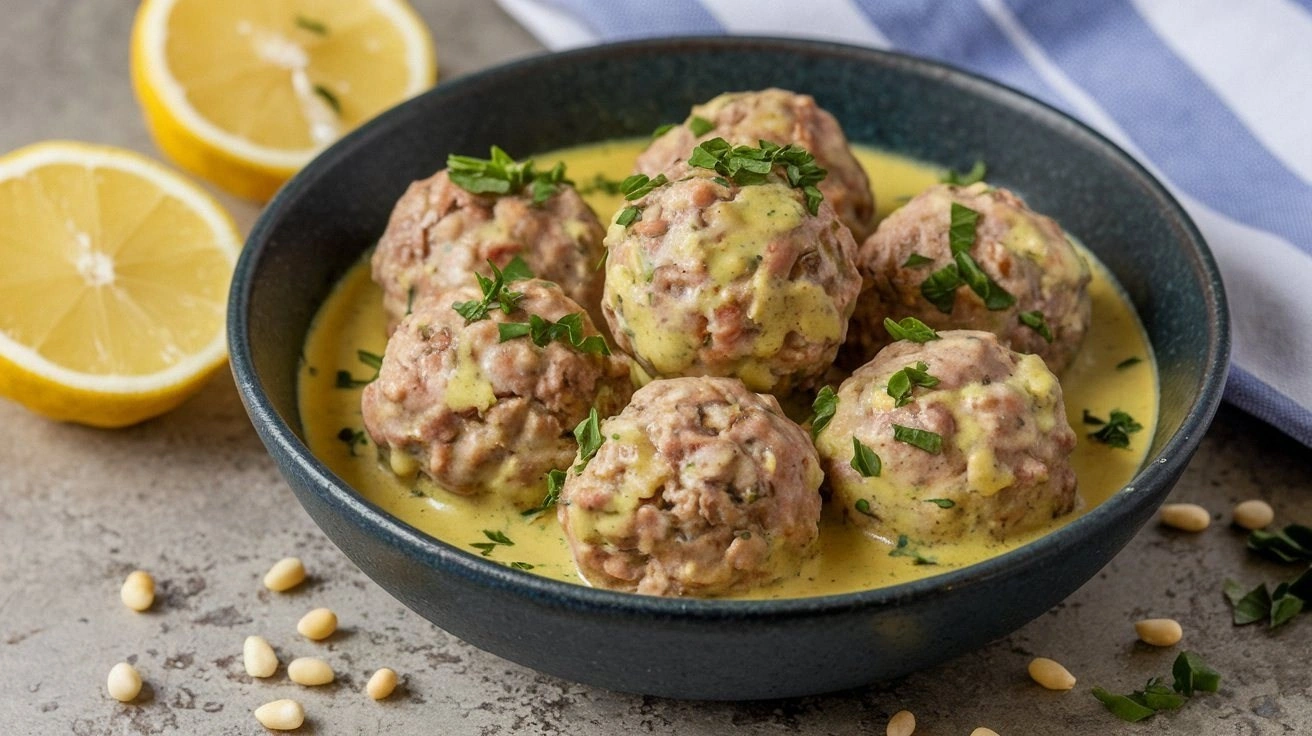
The Method — Step by Step
- Begin by heating a tablespoon of olive oil in a large pot over medium heat. Add the finely chopped onion and sauté until translucent, about 3–4 minutes. Stir in the minced garlic, letting it soften for 30 seconds before it begins to brown, which releases its sweet aroma.
- Add the ground lamb and ground beef to the pot, breaking the meat apart with a wooden spoon. Cook until the meat is no longer pink, stirring frequently to avoid clumping. This step ensures that the meat is fully browned and ready to absorb the herbs.
- Stir in the tomato paste, then pour in the white wine if using. Allow the mixture to simmer for 2 minutes, letting the alcohol evaporate and the paste thicken. This creates a rich, concentrated base for the meatballs.
- In a separate bowl, combine the egg, breadcrumbs, flour, dill, mint, parsley, lemon zest, and lemon juice. Mix until a uniform dough forms, then fold the mixture into the meat. The binding agents keep the meatballs cohesive and add moisture.
- Shape the mixture into bite‑sized meatballs, about the size of a walnut. Place them gently into the pot, spacing them so they don’t overlap. The meatballs should be snug but not packed too tightly.
- Pour in the chicken broth and water, then add the bay leaf, oregano, and a pinch of salt and pepper. Bring the liquid to a gentle boil, then reduce the heat to a simmer. Cover the pot and let the soup cook for 20 minutes, allowing the flavors to meld.
- After 20 minutes, remove the bay leaf and taste the broth. Adjust seasoning with more salt or pepper if needed. The broth should have a balanced, savory profile with a hint of citrus.
- Serve hot, garnished with a sprinkle of fresh parsley and a drizzle of olive oil. Pair with crusty bread or a side of Greek salad for a complete meal. Enjoy the comforting warmth of this homemade Greek classic.
Insider Tricks for Flawless Results
The Temperature Rule Nobody Follows
Heat the broth to a gentle simmer rather than a rolling boil. A high, vigorous boil can break the meatballs apart, while a slow simmer ensures the flavors meld without compromising texture. Keep a close eye on the pot; the moment the liquid starts to bubble vigorously, reduce the heat immediately.
Why Your Nose Knows Best
Smell the broth as it simmers; it should have a bright, citrusy aroma from the lemon and a deep, savory scent from the lamb. If the scent feels flat, it’s time to add a pinch more oregano or a splash more lemon juice. Your nose is the ultimate judge of flavor balance.
The 5-Minute Rest That Changes Everything
After removing the pot from heat, let the soup sit covered for five minutes. This resting period allows the meatballs to finish cooking in their own steam, resulting in a tender, juicy bite. Skipping this step can leave the meatballs slightly dry.
The Secret to a Clear Broth
If you prefer a clearer broth, strain the soup through a fine sieve before serving. The straining process removes any small bits of meat or herb residue, giving the soup a pristine appearance. Remember to reserve the broth for future soups or sauces.
The Classic Garnish Twist
Finish with a drizzle of high‑quality extra virgin olive oil and a sprinkle of fresh oregano. The oil adds a silky finish, while the oregano offers a fresh herbal burst that complements the meat. Don’t be afraid to experiment with different herbs; a pinch of thyme can add an unexpected depth.
Creative Twists and Variations
Mediterranean Meatball Soup
Swap lamb for ground pork and add a handful of chopped Kalamata olives for a briny twist. The pork’s mild flavor pairs well with olives, creating a Mediterranean vibe. This version is perfect for those who prefer a lighter, slightly sweeter meat.
Spicy Souvlaki Surprise
Add a teaspoon of red pepper flakes to the meat mixture for a subtle heat. The spice complements the lemon and herbs, giving the soup a lively kick. Serve with a side of tzatziki for a complete Greek experience.
Vegetarian Version
Replace the meat with a mixture of finely chopped mushrooms and lentils. The mushrooms provide umami depth, while lentils add protein and a hearty texture. This version maintains the herbaceous flavor profile while being plant‑based.
Cheesy Twist
Stir in a handful of crumbled feta cheese at the end of cooking. The feta adds a creamy, tangy element that balances the richness of the broth. It also gives the soup a delightful, melty texture.
Gluten‑Free Delight
Use almond flour instead of breadcrumbs and replace the flour with a gluten‑free all‑purpose blend. The texture remains firm, and the flavor profile stays intact. This variation is ideal for those with gluten sensitivities.
Storing and Bringing It Back to Life
Fridge Storage
Cool the soup completely before refrigerating. Store in an airtight container for up to 48 hours. The broth will thicken slightly; a quick stir before serving will restore its original consistency.
Freezer Friendly
Divide the soup into portioned containers, leaving a small headspace for expansion. Freeze for up to 3 months. When ready to eat, thaw overnight in the fridge and reheat gently.
Best Reheating Method
Reheat the soup over low heat, adding a splash of water or broth to loosen it if it’s thickened. Stir frequently to prevent scorching. A gentle simmer will revive the flavors without overcooking the meatballs.