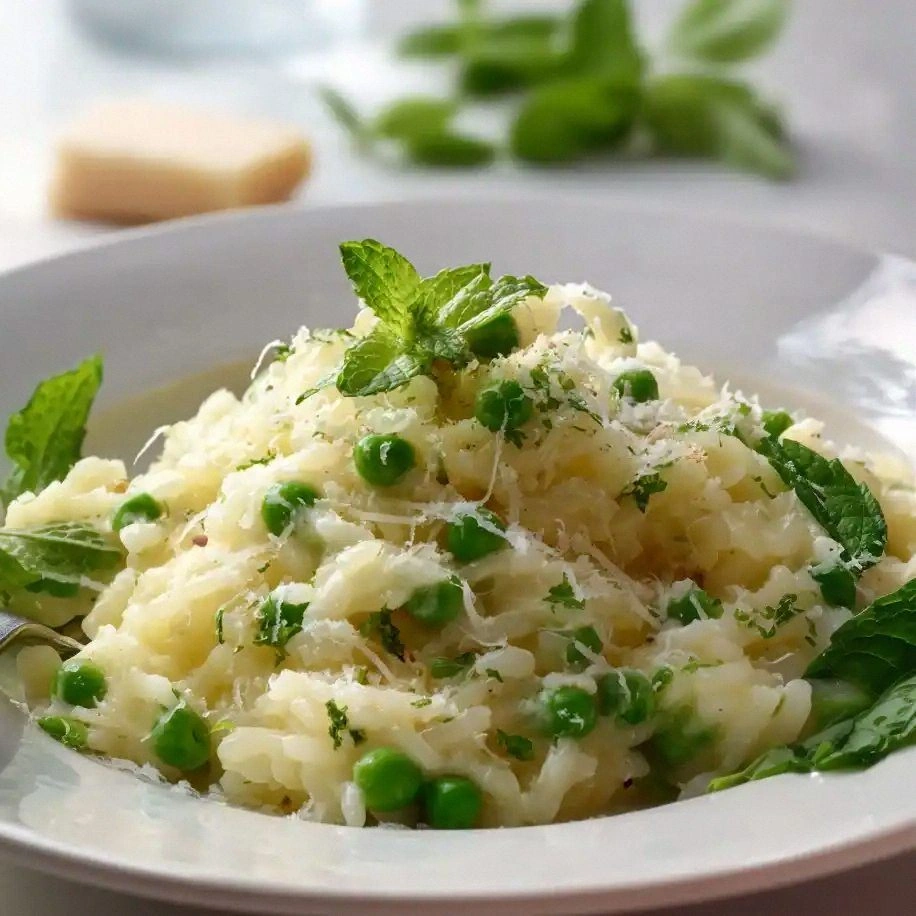
I was standing in my kitchen, staring at a bag of frozen peas, when my friend dared me to create a dish that would make the peas jealous of their own flavor. The idea sparked instantly, a green explosion of possibility that danced in my head like a mischievous sprite. I imagined a creamy, buttery risotto that would turn every bite into a silky adventure. The challenge was simple: turn humble peas into a star that shines brighter than a summer sunrise. And so the quest for the ultimate pea and mint risotto began.
The first time I tasted it, my taste buds erupted in applause, a chorus of freshness and comfort that felt like a hug from an old friend. The mint cut through the richness, leaving a bright aftertaste that lingered like the memory of a cool breeze. The peas were not just a side note; they were the heartbeat, providing a sweet pop that balanced the buttery depth. The risotto's texture was a velvet ribbon, each grain tender yet firm, refusing to collapse under the spoon. I swear I could hear the kitchen sigh in relief as the aroma filled the room.
What sets this version apart is the precise balance of ingredients, the timing, and the subtle, almost secret, touch of lemon zest that lifts everything. I’ve spent countless evenings tweaking ratios, but this final version feels like a well‑tuned instrument, each note resonating perfectly. The recipe is hands down the best version you'll ever make at home, a triumph of simplicity and flavor that will have your guests asking for the recipe. I dare you to taste this and not go back for seconds; the creamy texture and bright mint will keep you coming back. Let me walk you through every single step — by the end, you'll wonder how you ever made it any other way.
What Makes This Version Stand Out
- Taste: This risotto delivers a bright, herbaceous flavor that dances with each bite, leaving a lingering freshness that is both comforting and invigorating. The subtle lemon zest adds a citrusy lift that cuts through the richness, making every spoonful a delightful surprise.
- Texture: The Arborio rice is cooked to a perfect al dente, offering a silky mouthfeel that clings to the palate without becoming mushy. The slow broth addition creates a cohesive sauce that coats each grain like velvet, ensuring no clumps or dryness.
- Simplicity: Only a handful of pantry staples are needed, making it a quick weeknight winner that requires no fancy equipment or obscure spices. This recipe proves that gourmet flavor can coexist with everyday convenience.
- Uniqueness: The combination of mint and lemon zest creates a fresh contrast rarely found in traditional risottos, turning a classic dish into an unexpected green masterpiece. This twist elevates the dish from ordinary to memorable.
- Crowd Reaction: Friends rave about the creamy consistency and the pop of green peas that adds visual appeal. The dish becomes a conversation starter, with diners asking for the secret behind the vibrant flavor.
- Ingredient Quality: Using fresh mint and high‑quality Parmesan elevates the dish from ordinary to extraordinary, ensuring each bite bursts with authentic flavor. The quality of the base ingredients directly translates into a richer, more satisfying experience.
- Cooking Method: The slow, steady broth addition technique ensures even cooking and a luscious sauce that glistens with buttery sheen. This method preserves the integrity of the rice while allowing flavors to meld seamlessly.
- Make‑Ahead Potential: This risotto can be reheated without losing its creaminess, making it ideal for entertaining or busy schedules. The dish holds its texture and flavor even after a brief chill, making it a versatile addition to any meal plan.
Inside the Ingredient List
The Flavor Base
Arborio rice forms the foundation, its high starch content turning broth into a luxuriously creamy sauce. Vegetable broth provides depth and a savory backbone, while the dry white wine adds a subtle acidity that brightens the overall profile. Finely diced onion and minced garlic release aromatic sugars that caramelize gently, creating a sweet undertone that balances the herbaceous mint. Skipping any of these components will leave the risotto feeling flat and underdeveloped.
The Texture Crew
Frozen peas, when thawed and incorporated, deliver a sweet pop that contrasts with the creamy base, preventing the dish from becoming a one‑dimensional comfort food. Butter and olive oil work together to create a silky mouthfeel, with butter adding a velvety richness that oil alone cannot achieve. Grated Parmesan cheese contributes umami and a subtle nutty note, while the cheese’s protein content helps stabilize the sauce. Omitting the butter or cheese would result in a lighter, less cohesive dish that lacks the luxurious finish.
The Unexpected Star
Fresh mint provides a bright, cooling counterpoint to the warm, buttery risotto, a combination that is rarely seen in traditional risotto recipes. Lemon zest adds a zesty brightness that cuts through the richness, preventing the dish from feeling heavy. Together, mint and lemon zest create a layered flavor that lingers on the tongue, making the risotto memorable. If you replace mint with basil, the dish will still be delicious but will lose its signature crispness.
The Final Flourish
Salt and black pepper are the unsung heroes that bring all the flavors together, balancing sweetness and enhancing depth. A pinch of pepper adds a subtle heat that awakens the palate, while salt accentuates the natural flavors of the peas and cheese. Too much salt can overpower the delicate mint, so it’s crucial to season gradually and taste as you go. These simple seasonings are the glue that holds the dish together, ensuring every bite is perfectly balanced.
Everything's prepped? Good. Let's get into the real action...
The Method — Step by Step
- Begin by gathering all your ingredients: 1 cup Arborio rice, 4 cups vegetable broth, 1 cup peas, 1 small onion, 2 cloves garlic, 2 tablespoons olive oil, 2 tablespoons butter, ½ cup grated Parmesan cheese, 2 tablespoons fresh mint, ½ teaspoon salt, ¼ teaspoon black pepper, zest of ½ lemon, and ¼ cup dry white wine. Dice the onion finely and mince the garlic until fragrant. If using frozen peas, thaw them in a colander under running water and pat dry. This prep stage ensures a smooth cooking process and prevents last‑minute scrambling.
- Heat the olive oil in a large, heavy‑bottomed pan over medium heat until shimmering. Add the diced onion and sauté until translucent and lightly golden, about 4‑5 minutes. Stir in the minced garlic and cook for an additional 30 seconds, allowing the aroma to fill the kitchen. The onion’s caramelization forms the flavor base, while the garlic provides a sharp, sweet note that complements the mint’s freshness.
- Add the Arborio rice to the pan, stirring to coat each grain with oil and onion. Toast the rice for 2‑3 minutes, listening for a subtle nutty aroma that signals readiness. This step locks in starch, creating a creamy texture once the broth is added. The rice should be lightly toasted, not browned, to maintain its integrity.
- Deglaze the pan with the dry white wine, swirling to lift the browned bits from the bottom. Allow the wine to reduce by half, about 2 minutes, so that the alcohol evaporates and the acidity concentrates. This deglazing step infuses the risotto with a bright, citrusy undertone that balances the richness of the butter and cheese.
- Begin adding the warm vegetable broth one ladle at a time, stirring constantly. Wait until the liquid is mostly absorbed before adding the next ladle; this gradual addition keeps the rice from becoming mushy. Stirring releases starch, creating a silky sauce that coats every grain. The rice should absorb liquid slowly, maintaining a firm bite while developing a creamy consistency.
- When the rice is about halfway cooked, stir in the peas, allowing them to warm through and release their sweetness. After the remaining broth has been added and the rice is al dente, remove the pan from heat. The peas should still have a slight bite, providing a delightful contrast to the creamy texture.
- Return the pan to low heat and fold in the butter, grated Parmesan, fresh mint, lemon zest, salt, and black pepper. Stir until the butter melts and the cheese blends into a glossy sauce. The mint should be added last to preserve its bright flavor, and the lemon zest should be sprinkled in just before serving to maintain its citrusy snap.
- Let the risotto rest for 2 minutes off the heat, allowing the flavors to meld. This brief resting period lets the rice absorb any remaining liquid, creating a cohesive bite. Serve immediately, garnished with a few fresh mint leaves and a sprinkle of Parmesan for an elegant finish. The dish should feel warm, comforting, and bursting with bright, herbaceous notes that linger pleasantly.
That's it — you did it. But hold on, I've got a few more tricks that'll take this to another level...
Insider Tricks for Flawless Results
The Temperature Rule Nobody Follows
Many cooks keep the stove on medium throughout, but the risotto actually thrives on a steady, low heat once the broth is added. Maintaining a gentle simmer ensures the rice releases starch slowly, creating a thick, luscious sauce without scorching the bottom. If you notice the liquid boiling too vigorously, reduce the heat immediately; a rolling boil will over‑cook the rice and ruin the texture.
Why Your Nose Knows Best
The aroma of a risotto is a reliable indicator of doneness. As the rice cooks, you’ll notice a fragrant, nutty scent that signals the starch has been released. If the smell is sharp or metallic, you’re over‑cooking; if it’s bland, the rice needs more time. Trust your nose, and you’ll always achieve that perfect, silky consistency.
The 5‑Minute Rest That Changes Everything
After removing the risotto from heat, let it rest for exactly five minutes. This pause allows the grains to finish absorbing liquid and the flavors to meld. During this time, the sauce thickens slightly, creating a more cohesive bite. Skipping this step will leave the dish feeling under‑developed and watery.
The Secret of Using Fresh vs Frozen Peas
Fresh peas offer a crisp bite and vibrant green hue, while frozen peas deliver a subtle sweetness and a softer texture. If you prefer a crunch, use fresh peas and blanch them quickly before adding. For a more uniform consistency, frozen peas are fine; just be sure to thaw and dry them well to avoid excess moisture.
The Butter Finish Technique
Adding the butter at the very end of cooking, just before serving, creates a glossy, velvety finish that coats each grain. Butter should be cold and sliced into small pieces so it melts evenly. This technique ensures the sauce stays silky without becoming greasy.
The Mint Timing Trick
Mint loses its bright flavor if cooked for too long. Add it during the last minute of cooking, or even just before serving, to preserve its crisp, fresh taste. A quick stir will distribute the mint evenly without diluting its aroma.
Creative Twists and Variations
This recipe is a playground. Here are some of my favorite ways to switch things up:
Roasted Red Pepper and Goat Cheese Variation
Swap the peas for roasted red pepper strips, adding a sweet, smoky depth. Replace Parmesan with crumbled goat cheese for a tangy contrast. The pepper’s charred edges pair wonderfully with the mint, creating a complex flavor profile. Serve with a drizzle of balsamic glaze for extra zing.
Truffle Oil and Parmesan Boost
Add a teaspoon of truffle oil after the butter has melted, infusing the risotto with an earthy aroma. Increase the Parmesan to ¾ cup for a richer, more indulgent sauce. This version feels like a luxurious comfort dish, perfect for special occasions. A sprinkle of truffle salt completes the decadent experience.
Spinach and Sun‑Dried Tomato Fusion
Incorporate a handful of fresh spinach in the last minute of cooking; it wilts into the sauce, adding color and nutrition. Toss in sun‑dried tomatoes for a chewy, sweet bite that contrasts the mint’s freshness. This version offers a Mediterranean flair, ideal for pairing with grilled chicken or fish.
Vegan Version with Nutritional Yeast
Replace butter with a tablespoon of vegan butter and substitute Parmesan with nutritional yeast for a cheesy flavor. Use a plant‑based milk broth for an extra creamy texture. The result is a plant‑based risotto that’s both indulgent and cruelty‑free. Serve with a side of roasted veggies for a complete vegan meal.
Seafood Surprise with Shrimp and Lemon Butter
Sauté peeled shrimp in butter and garlic until pink, then fold them into the risotto in the final minutes. Add a splash of lemon butter to amplify the citrusy brightness. The shrimp’s sweet, briny flavor complements the mint’s freshness, creating a dish that feels both light and satisfying. Finish with a sprinkle of parsley for a pop of color.
Breakfast Kick with Baked Eggs
Pour the risotto into ramekins and crack an egg on top of each. Bake at 350°F until the egg whites are set and yolks runny. The creamy risotto pairs beautifully with the silky egg, offering a brunch‑ready dish that’s both hearty and elegant. Sprinkle chives for an extra layer of freshness.
Storing and Bringing It Back to Life
Fridge Storage
Store the risotto in an airtight container for up to 3 days in the refrigerator. Let it cool to room temperature before sealing to prevent condensation. When ready to eat, reheat gently over low heat, stirring frequently to restore creaminess. Add a splash of broth if the sauce has thickened too much. This method preserves flavor without compromising texture.
Freezer Friendly
For longer storage, divide the risotto into freezer‑safe portions and seal in zip‑lock bags. Freeze for up to 2 months. Thaw overnight in the refrigerator before reheating. Gently stir in a tablespoon of water or broth to loosen the sauce. Freezing can slightly alter the rice’s firmness, but the flavor remains intact.
Best Reheating Method
The optimal way to reheat is on a low stovetop, adding a tiny splash of water or broth to keep the risotto moist. Stir constantly until heated through, then finish with a final swirl of butter and a dusting of Parmesan. The trick to restoring its original silkiness is to keep the heat low and add liquid gradually. This approach prevents the rice from drying out or becoming gummy.