Love this? Pin it for later! 📌
Creamy One-Pot Winter Squash & Carrot Stew
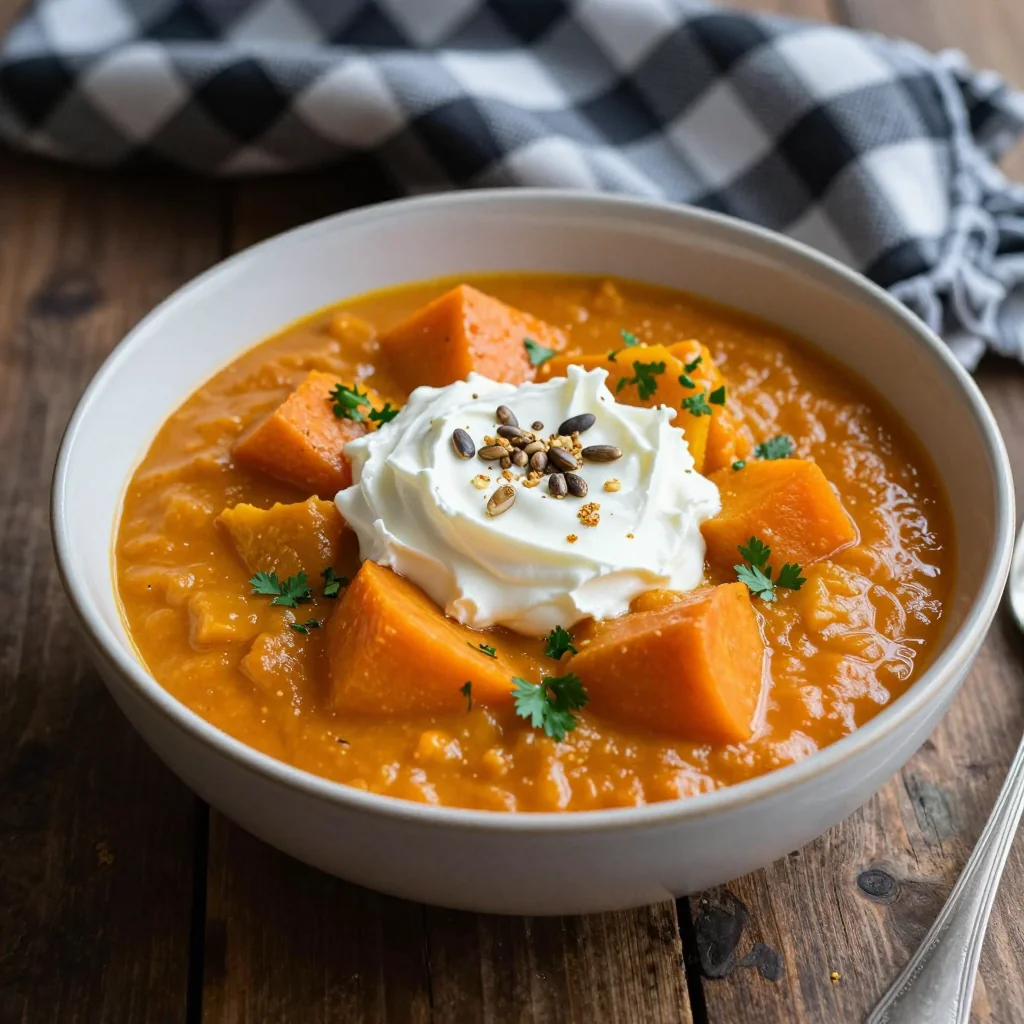
When the first frost paints the windows and the daylight tucks itself in before dinner, my kitchen turns to this stew the way a cat seeks a sunbeam—instinctively, gratefully, and without apology. I developed the recipe during a February snowstorm when the roads were impassable, the fridge was down to roots and squash, and I needed something that tasted like a hand-knitted blanket. One pot, thirty-five minutes, and the scent of ginger–coconut steam later, I ladled out a sunset-orange stew so velvety that my neighbor—who “doesn’t do soup”—asked for the recipe before the bowl was empty. Since then it has become the unofficial opener to our ski-trip weekends, the Wednesday-night recharge, and the dish I deliver to friends who’ve just brought babies home from the hospital. It is vegan by accident, gluten-free by nature, and indulgent by design. Make it once and you’ll find yourself buying squash on autopilot, just so the ingredients are waiting in the basket when the temperature drops.
Why This Recipe Works
- One-pot magic: Everything—from sautéing aromatics to puréeing—happens in the same Dutch oven, so the flavors build and the dishes stay minimal.
- Silky without dairy: A cup of light coconut milk lends luxurious body while keeping the stew vegan and lactose-free.
- Layered sweetness: Roasting the squash and carrots first caramelizes their natural sugars, adding depth you can’t get from boiling alone.
- Freezer-friendly: The stew thaws beautifully, making it a stellar make-ahead meal for busy weeks.
- Balanced nutrition: Each bowl delivers two full servings of vegetables, plant-based protein from white beans, and healthy fats from coconut and pepitas.
- Customizable heat: A single jalapeño adds gentle warmth; leave it out for kids or double it for fire-seekers.
Ingredients You'll Need
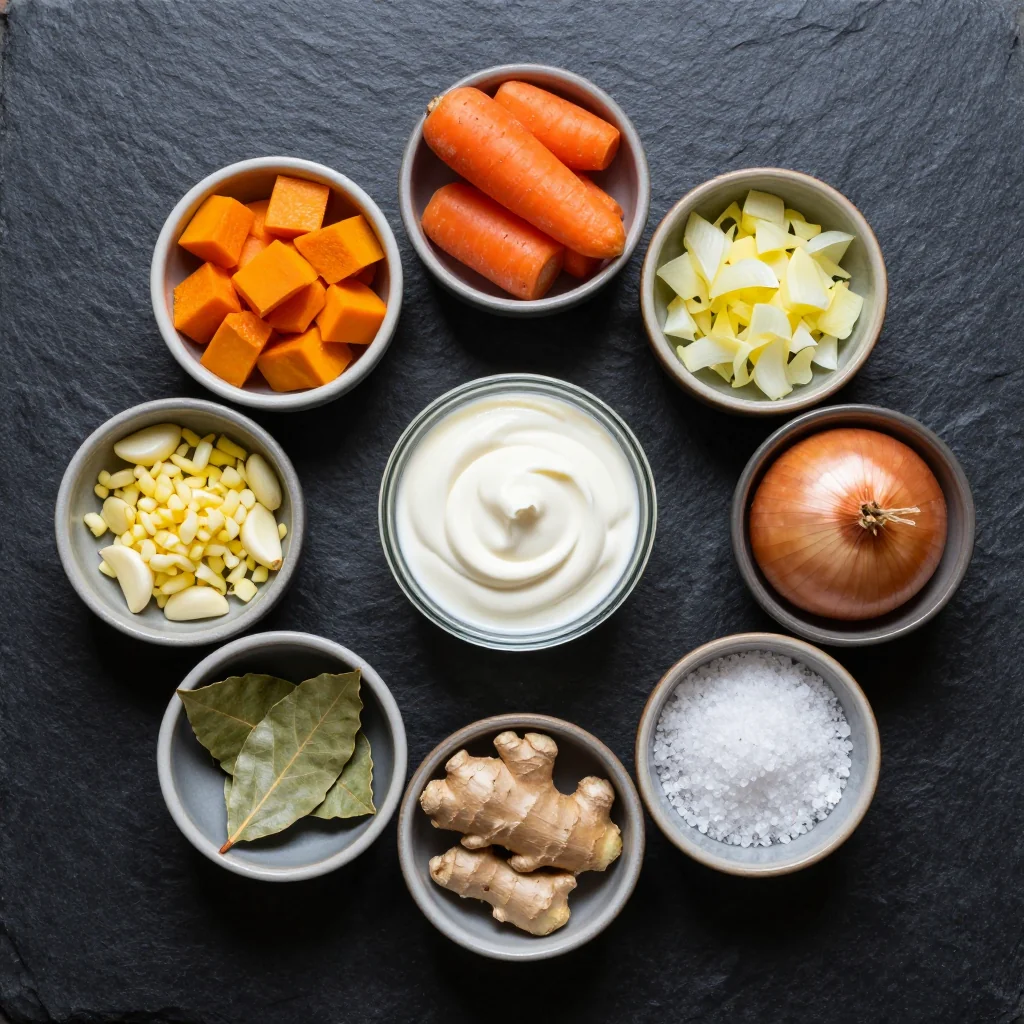
Great stew starts at the produce bin. Look for a squat sugar-pie pumpkin or a small kabocha squash with matte, unblemished skin; either will yield sweet, non-fibrous flesh. When thumping isn’t an option, trust weight: the heavier the squash, the denser and creamier the interior. Carrots should be firm and snapping, not rubbery—if the tops are attached, they should look perky, not wilted. Buy them in bunches rather than bags; the flavor is noticeably brighter.
Olive oil carries the aromatics, so use one you’d happily dip bread into. The coconut milk should be the “light” variety sold in cans; full-fat makes the stew cloying, and the carton drinking kind is too watery. Vegetable broth is next. I keep low-sodium bouillon paste in the fridge for convenience, but if you have homemade stock, celebrate—its collagen will add extra silkiness. Canned white beans (great northern or cannellini) give body and protein; rinse them well to remove the starchy packing liquid. Fresh ginger is non-negotiable; powdered can’t compete with the zing of Micro-planed fresh root. Finally, toast your own pepitas (pumpkin seeds) if possible: a dry skillet for three minutes transforms them into nutty, golden crunch that holds up even after refrigeration.
Substitutions? Sweet potato swaps in for squash in a pinch, though the color will lean more terra-cotta. For coconut-free diets, cashew cream—soak ½ cup raw cashews in boiling water for 30 minutes, then blitz with ¾ cup water until silky—works beautifully. If you can’t find jalapeño, a pinch of smoked paprika adds subtle heat and a whisper of campfire.
How to Make Creamy One-Pot Winter Squash & Carrot Stew
Roast the vegetables
Preheat oven to 425 °F (220 °C). Peel and cube 2½ lb squash into 1-inch chunks; peel and bias-cut 1 lb carrots into ½-inch coins. Toss with 2 Tbsp olive oil, 1 tsp kosher salt, and ½ tsp pepper on a parchment-lined sheet. Spread in a single layer—overcrowding steams instead of roasts—and slide onto middle rack for 25 minutes, flipping once halfway. Edges should caramelize to deep gold; this concentrates sweetness and prevents a watery stew.
Sauté aromatics
While vegetables roast, warm 1 Tbsp olive oil in a heavy 4-quart Dutch oven over medium. Add 1 diced yellow onion and cook 4 minutes until translucent. Stir in 3 minced garlic cloves, 1 Tbsp grated fresh ginger, and 1 small jalapeño (ribs removed for milder heat). Cook 60 seconds; the ginger perfume should bloom but not brown.
Sprinkle 1 tsp ground coriander and ½ tsp turmeric over the aromatics; toast 30 seconds until the spices smell nutty. Pour in 3 cups warm vegetable broth, scraping the fond (those browned bits equal flavor). Add roasted squash and carrots plus 1 bay leaf. Bring to a gentle boil, then reduce to a lively simmer for 10 minutes so the vegetables soften further.
Purée safely
Remove bay leaf. Use an immersion blender directly in the pot, tilting the pan to submerge the head. Blend until satin-smooth, 45–60 seconds. No immersion blender? Cool 5 minutes, then ladle into a countertop blender in batches; remove the center cap and cover with a folded towel to vent steam.
Cream & beans
Return puréed soup to low heat. Stir in 1 cup light coconut milk and 1 can rinsed white beans. Warm 3–4 minutes; do not boil or coconut milk can separate. Taste and adjust salt—roasted vegetables often need an extra pinch.
Texture boost
For complexity, reserve ½ cup roasted cubes before puréeing and stir them back in at the end; they bob like little nuggets of sweetness. Alternatively, add ½ cup cooked wild rice for chew.
Toast pepitas
While soup heats, toast ¼ cup raw pepitas in a dry skillet over medium, shaking often, until they puff and pop, 3 minutes. Transfer to a small bowl; season with a pinch of flaky salt and a squeeze of lime.
Serve & garnish
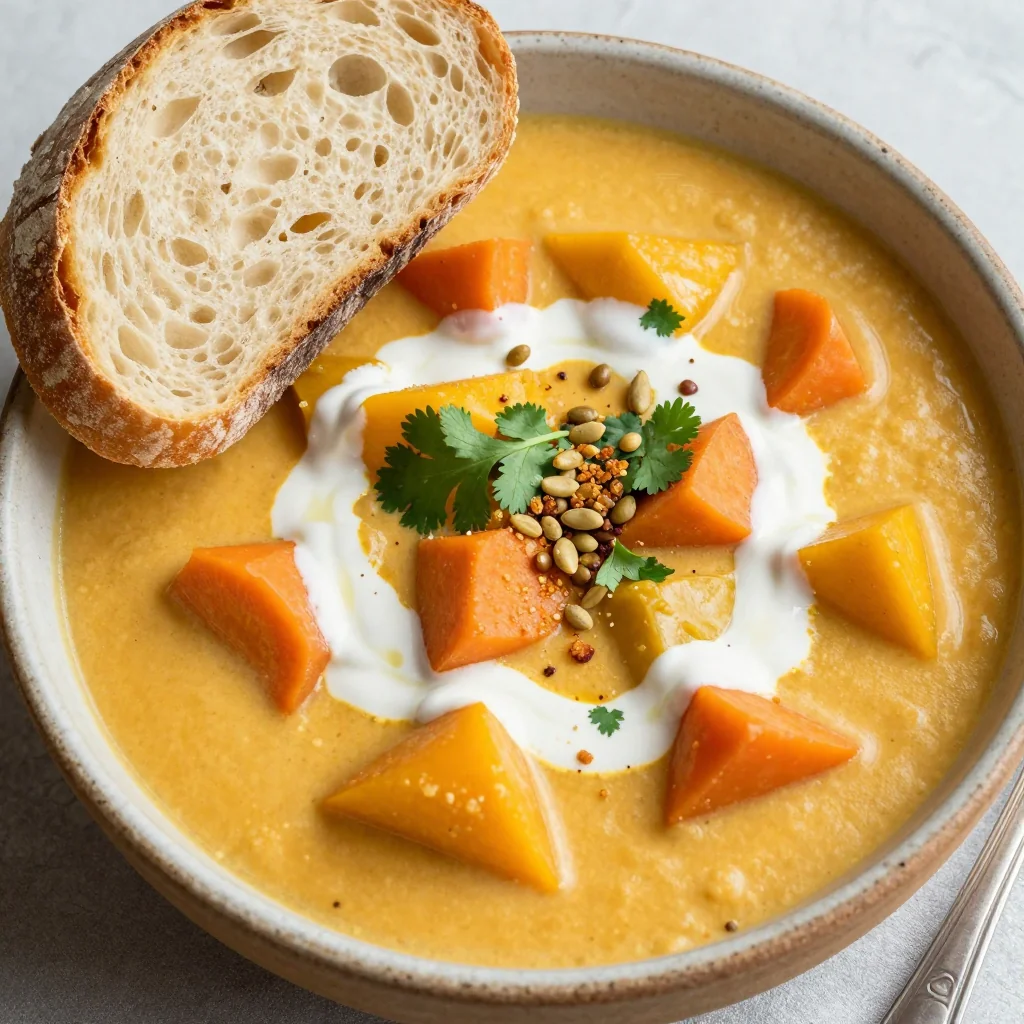
Ladle into warmed bowls. Swirl an extra spoon of coconut milk for contrast, then shower with toasted pepitas, chopped cilantro, and a crack of black pepper. Offer lime wedges; the acid brightens the earthy sweetness.
Expert Tips
Double-batch trick
Roast twice the vegetables and freeze half on a sheet tray; once solid, bag for up to 3 months. Future stew nights become a 15-minute affair.
Blender safety
Never fill a countertop blender more than half-full with hot liquid. Vent the lid and start on low speed to prevent an eruption of orange lava.
Salt timing
Salt after puréeing; blending concentrates flavors and can make an early-salted soup taste briny rather than bright.
Bean rinse hack
Rinse beans in the can itself: fill with water, cover, and shake like a cocktail; the skins rub off and drain away with the starchy water.
Ginger grating
Freeze ginger for 20 minutes; it grates like chalk and the fibers don’t clog the Micro-plane.
Serving temp
Serve between 160–170 °F; hotter dulls coconut flavor, cooler feels gloopy. A thermometer keeps you in the sweet spot.
Variations to Try
- Harissa swirl: Whisk 1 Tbsp harissa paste into the coconut milk for North-African heat and smoky complexity.
- Apple & sage: Replace jalapeño with 1 cup diced tart apple and fry 4 fresh sage leaves in oil for crispy garnish.
- Lemony lentil: Swap beans for 1 cup cooked green lentils and finish with 1 tsp lemon zest plus juice of half a lemon for brighter acidity.
- Creamy chicken: Stir in 2 cups shredded rotisserie chicken with the coconut milk for omnivore households; use chicken broth instead of vegetable.
- Thai twist: Add 1 stalk bruised lemongrass and 1 tsp Thai red curry paste with the ginger; garnish with Thai basil and a drizzle of fish sauce or soy for vegan.
Storage Tips
Cool the stew completely—within two hours—to prevent bacteria bloom. Divide into shallow containers so it chills rapidly; deeper tubs trap heat and can sour the coconut milk. Refrigerated, the stew keeps 4 days, though flavors meld and intensify, so day-two bowls often taste best. For longer storage, freeze in pint-size silicone Souper-Cubes or zip bags pressed flat; they stack like books and thaw in under 30 minutes in a bowl of tepid water. Frozen, the stew is excellent for 3 months; beyond that coconut milk can separate and become grainy, though a vigorous whisk after reheating usually restores silkiness.
Reheat gently: slide the cold stew into a saucepan with a splash of broth or water (it thickens as it sits) and warm over medium-low, stirring often, until the center hits 165 °F. Microwave works in a pinch—use 50 % power and stir every 60 seconds to prevent hot spots. If the soup breaks (tiny oil droplets on surface), buzz again with the immersion blender or whisk in a tablespoon of warm broth until re-emulsified.
Frequently Asked Questions
creamy onepot winter squash and carrot stew for cozy nights
Ingredients
Instructions
- Roast: Preheat oven to 425 °F. Toss squash and carrots with 2 Tbsp oil, 1 tsp salt, ½ tsp pepper. Roast on parchment-lined sheet 25 min until caramelized.
- Sauté: In Dutch oven heat 1 Tbsp oil over medium. Cook onion 4 min, add garlic, ginger, jalapeño; cook 1 min. Stir in coriander & turmeric 30 sec.
- Simmer: Add roasted veg, broth, bay leaf. Simmer 10 min. Remove bay leaf.
- Blend: Purée until smooth with immersion blender. Stir in coconut milk & beans; warm 3 min.
- Toast: Dry-toast pepitas 3 min until puffed.
- Serve: Ladle into bowls, swirl extra coconut milk, top with pepitas & cilantro. Offer lime.
Recipe Notes
Stew thickens as it sits; thin with broth when reheating. Freeze portions up to 3 months.