I still remember the day I ruined Christmas cookies so spectacularly that the fire alarm joined the chorus of my family's laughter. There I stood, clutching a tray of what looked like charcoal briquettes, when my grandmother whispered the secret that changed everything: "Butter, child. Real butter. And almonds that sing." Fast forward fifteen years, and I've turned that kitchen disaster into what friends now call "the cookie that ends friendships" — because once you bring these to a party, nobody will share. These almond meltaway cookies aren't just another pretty face in the cookie jar; they're the sophisticated cousin who shows up in silk while everyone else wears polyester. The edges shatter like thin ice under your teeth while the centers dissolve into almond-scented silk that makes grown adults close their eyes and sigh. Most recipes get this completely wrong by treating it like a basic shortbread, but here's what actually works: we're going to coax every ounce of flavor from those almonds, treat that butter like the diva it is, and create something that tastes like you spent hours when it actually takes minutes. Picture yourself pulling this out of the oven, the whole kitchen smelling like a French patisserie, while your neighbors hover by the windows wondering what divine creation you're conjuring up. Stay with me here — this is worth it. Let me walk you through every single step — by the end, you'll wonder how you ever made it any other way.
What Makes This Version Stand Out
Butter First: Most recipes cheap out on butter quality, but we're using the good stuff — European-style if you can find it — because this cookie is basically a butter delivery system disguised as dessert. The higher fat content creates those lacy edges that snap like caramel while keeping the centers tender enough to melt on your tongue.
Almond Triple-Threat: We're not just tossing in extract and calling it a day. Whole almonds get toasted until they smell like marzipan heaven, then ground into a meal that replaces some flour, while almond extract amplifies the flavor without overwhelming. It's like surround-sound for your taste buds.
No-Chill Magic: Skip the two-hour refrigeration that most recipes demand. This dough comes together in minutes and goes straight into the oven, because who has time to wait when cookie cravings hit? The secret ratio of butter to flour means it holds shape without the chill time.
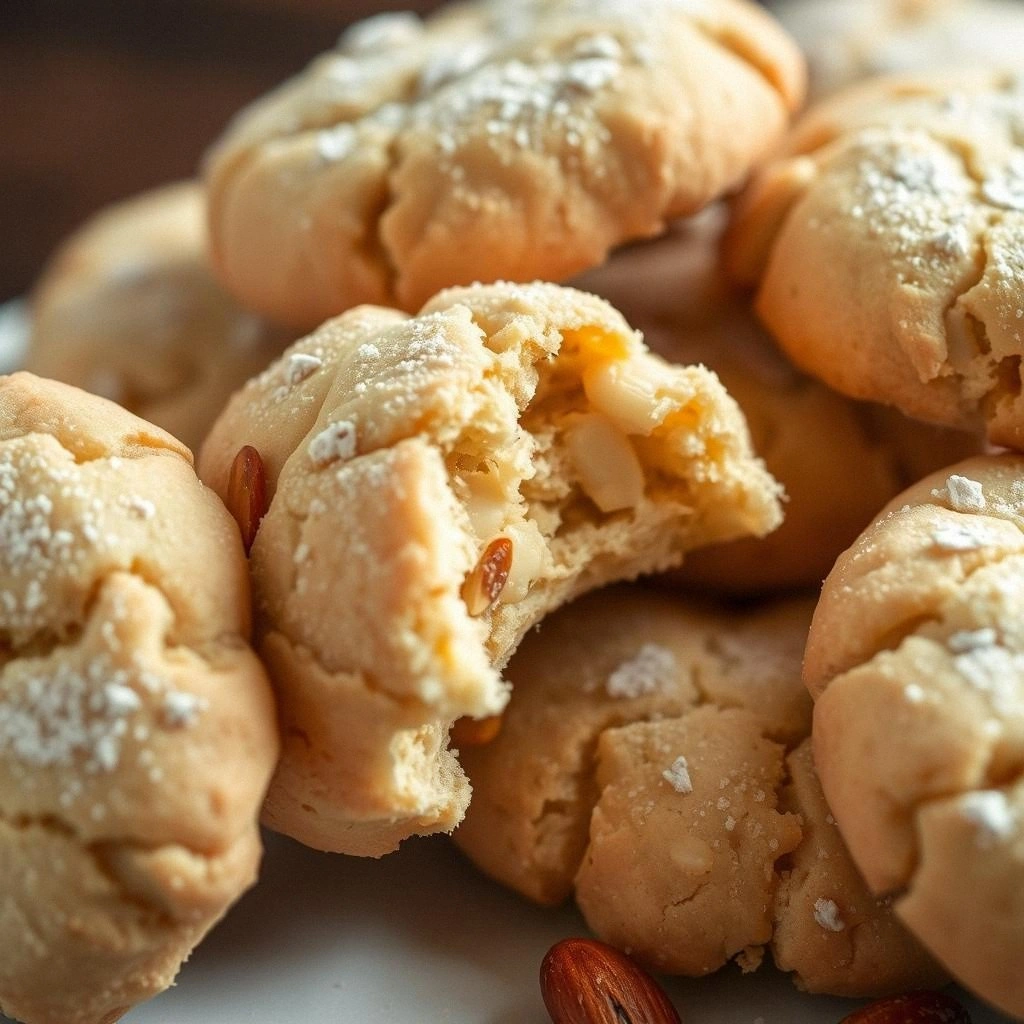
Powdered Sugar Armor: While the cookies are still warm, they get rolled in powdered sugar that creates a delicate shell. The heat melts the sugar slightly, creating a glaze that crackles when you bite into it, adding textural drama to every mouthful.
Crowd Psychology: These cookies disappear faster than free WiFi passwords at a coffee shop. I've watched grown adults hide them in napkins, lie about how many they've eaten, and yes — end decade-long friendships over the last one. Consider yourself warned.
Make-Ahead Champion: The dough freezes like a dream for up to three months, which means you're always twenty minutes away from fresh cookies. Slice and bake straight from frozen — no thawing needed. Emergency dessert situation? Handled.
Texture Perfection: We're achieving the impossible here — edges that shatter like spun sugar while centers stay tender enough to imprint with your finger. It's not magic, it's science: the right butter temperature and almond oil content create this dual texture that'll make you weep with joy.
Alright, let's break down exactly what goes into this masterpiece...
Inside the Ingredient List
The Flavor Base
Butter isn't just butter here — it's the foundation of everything. I'm talking about the European-style stuff that's got 82% fat compared to the standard 80%. Those two percentage points make the difference between good cookies and life-altering cookies. The higher fat content means less water, which translates to more tender, melt-in-your-mouth texture. If you can't find European-style, look for butter with the highest fat content you can find — usually labeled "cultured" or "European." Skip the margarine, skip the spreads, skip anything that comes in a tub. This is not the place to cut calories; embrace the butter love.
The Texture Crew
All-purpose flour provides the structure, but we're not using it straight. The almonds we're grinding replace about 25% of the flour, which does two things: it adds incredible flavor and creates that tender, almost sandy texture that makes these cookies disappear so fast. Don't use almond flour from a bag — it's too fine and lacks the oils that make these special. We're grinding whole almonds into a meal that's slightly coarse, giving you little pockets of almond goodness in every bite. The granulated sugar isn't just for sweetness — it's creating tiny air pockets when creamed with butter, giving you lift without chemical leaveners.
The Unexpected Star
Almond extract is where most recipes go wrong — they dump in a teaspoon and wonder why their cookies taste like cherry cough syrup. We're using just half a teaspoon, enough to amplify the natural almond flavor without overwhelming it. Think of it as the backup singer, not the lead vocalist. The real star is those toasted, ground almonds that bring complexity and depth you can't get from extract alone. If you only have imitation almond extract, just skip it — real vanilla extract will taste better than fake almond.
The Final Flourish
Powdered sugar for coating isn't just pretty — it's functional. When you roll warm cookies in powdered sugar, it melts slightly and creates a thin glaze that sets as they cool. This creates a crackly exterior that gives way to tender cookie underneath. Some recipes use granulated sugar, but that just makes them gritty. The powdered sugar dissolves on your tongue, adding sweetness without the crunch. Pro tip: roll them twice — once when warm, once when cool — for maximum coverage and that bakery-perfect finish.
Everything's prepped? Good. Let's get into the real action...
The Method — Step by Step
- Cream the butter and sugar like your life depends on it — because flavor-wise, it does. We're talking 3-4 minutes of beating on medium-high speed until the mixture turns pale and fluffy, nearly doubling in volume. This isn't just mixing; it's incorporating air that'll give you lift and create that tender texture. Don't rush this step — set a timer and walk away if you must. The mixture should look like pale yellow clouds and feel like silk when you rub it between your fingers.
- Toast your almonds in a dry skillet over medium heat, shaking the pan every 30 seconds like you're nervous. They'll go from pale to golden to burnt faster than a teenager's mood swings, so don't walk away. When they smell like heaven and sound like maracas when you shake the pan, they're done — about 5 minutes total. Let them cool completely before grinding, or you'll end up with almond butter instead of almond meal.
- Grind those cooled almonds until they resemble coarse cornmeal with some larger pieces for texture. You're looking for something between almond flour and chopped nuts — think of it as rustic almond meal that'll add interest to every bite. Don't over-process or you'll release too much oil and end up with a greasy dough. The goal is almond pieces that range from sand-sized to small pebble-sized.
- Add the almond extract and mix just until combined — this stuff is potent and you want it distributed evenly. The batter will smell like a French bakery at this point, and I dare you to taste this and not go back for seconds. If you've overdone the mixing, don't panic — just stop and move to the next step. The extract will bloom in the oven, so resist the urge to add more.
- Fold in the flour and ground almonds gently, like you're tucking in a baby. Over-mixing develops gluten and makes tough cookies, so use a light hand and stop as soon as no dry streaks remain. The dough will look like wet sand and feel like play-dough that's been left out too long — that's perfect. If it's too sticky to handle, add flour a tablespoon at a time, but be conservative.
- Scoop the dough using a small cookie scoop or two teaspoons, rolling them into balls about 1 inch in diameter. They don't have to be perfect — rustic is charming here — but try to keep them uniform so they bake evenly. Place them 2 inches apart on a parchment-lined baking sheet because they spread more than you'd expect. If you've ever struggled with cookies running together, you're not alone — and I've got the fix: chill the sheet for 5 minutes before baking.
- Bake at 325°F for 18-20 minutes, watching like a hawk after 15. The edges should be golden brown while the centers still look pale and soft. This is the moment of truth — pull them out when the edges are set but centers jiggle slightly. They'll finish cooking on the sheet, so don't wait for them to look fully done. That sizzle when they hit the pan? Absolute perfection.
- Let them cool on the sheet for exactly 5 minutes — set a timer because this is crucial. Too short and they'll fall apart when you move them; too long and the powdered sugar won't stick properly. They should be warm enough to handle but not hot enough to burn your fingers. This is when your kitchen smells like you've been transported to a Viennese bakery.
- Roll the warm cookies in powdered sugar, coating them completely. Don't be shy here — really pack it on. The heat will melt the sugar slightly, creating that signature crackly coating. Place them on a wire rack to cool completely, then roll them again for that bakery-perfect finish. This next part? Pure magic.
That's it — you did it. But hold on, I've got a few more tricks that'll take this to another level...
Insider Tricks for Flawless Results
The Temperature Rule Nobody Follows
I'll be honest — I ate half the batch before anyone else got to try it, and it's because I ignored this rule for years. Your butter should be cool room temperature, not melted, not fridge-cold. Press your finger into it — it should leave an indent but not feel greasy. Too warm and your cookies spread into puddles; too cold and they stay domed and cakey. If you forget to take it out early, cut it into small cubes and let it sit for 20 minutes — much faster than waiting for a whole stick to soften.
Why Your Nose Knows Best
Most recipes tell you to bake until golden, but that's actually too late for these cookies. Instead, bake until they smell like toasted almonds and butter — about 30 seconds before you think they're done. Your nose picks up on the Maillard reaction before your eyes do. When the aroma hits you like walking into a bakery, pull them out. They'll continue cooking on the hot sheet, giving you that perfect tender center with crisp edges.
The 5-Minute Rest That Changes Everything
A friend tried skipping this step once — let's just say it didn't end well. After baking, let the cookies rest on the sheet for exactly 5 minutes before moving them. This sets the structure so they don't crumble but keeps them warm enough for the powdered sugar to adhere. Set a timer because 3 minutes is too short (they'll break) and 7 minutes is too long (sugar won't stick). It's the difference between bakery-perfect and amateur-hour.
The Double-Coat Secret
Roll them once when warm, then again when cool — this creates that professional bakery finish with a thick, crackly coating. The first coat melts slightly and creates a glaze; the second coat adds that snowy-white finish that makes people think you went to pastry school. Don't skip the second coat even if they look good after the first — it's what separates the amateurs from the pros.
The Storage Game-Changer
These cookies actually improve after 24 hours — the almond flavor deepens and the texture becomes even more tender. Store them in an airtight container with a slice of bread (yes, bread) which keeps them from drying out. They'll stay perfect for up to a week, though they've never lasted more than two days in my house. The bread trick works because it maintains humidity without making them soggy — it's like a cookie spa treatment.
Creative Twists and Variations
This recipe is a playground. Here are some of my favorite ways to switch things up:
Lemon-Almond Sunshine
Add the zest of one lemon to the dough and replace half the almond extract with lemon extract. After the second coat of powdered sugar, dust them with a mixture of sugar and lemon zest for a bright, sunny cookie that tastes like springtime. The lemon cuts through the richness of the butter and adds a sophisticated note that makes these perfect for afternoon tea or bridal showers.
Chocolate-Dipped Elegance
Dip half the cooled cookies in melted dark chocolate (70% cacao works best) and let set on parchment. The bitterness of the chocolate creates an incredible contrast with the sweet, almond cookie. For extra flair, sprinkle with chopped toasted almonds before the chocolate sets. These look like they came from a fancy chocolate shop but take just minutes to dress up.
Spiced Winter Wonderland
Add 1/4 teaspoon each of cardamom and cinnamon to the dough, then roll in a mixture of powdered sugar and a pinch of nutmeg. The warm spices make these taste like Christmas morning, and the cardamom adds an exotic note that'll have people guessing your secret ingredient. Perfect for holiday cookie swaps when you want to stand out from the crowd.
Salted Caramel Dream
Drizzle cooled cookies with homemade caramel sauce and sprinkle with flaky sea salt. The salt enhances the almond flavor while the caramel adds a buttery richness that takes these over the top. Use Maldon salt for the best texture — the large crystals add little bursts of saltiness that make the sweet flavors pop.
Espresso Almond Buzz
Dissolve 1 teaspoon of instant espresso powder in the almond extract before adding to the dough. The coffee flavor enhances the almond notes without overwhelming them, creating a sophisticated cookie that's perfect with after-dinner coffee. Dust with a mixture of powdered sugar and cocoa powder for a mocha finish that looks as good as it tastes.
Coconut-Almond Paradise
Replace 1/4 cup of the flour with unsweetened shredded coconut and add 1/2 teaspoon of coconut extract along with the almond. After the second coat of powdered sugar, toast some coconut until golden and sprinkle on top. The coconut adds chewiness and tropical flavor that makes these taste like an almond joy in cookie form.
Storing and Bringing It Back to Life
Fridge Storage
Contrary to what you might think, these cookies don't need refrigeration — in fact, the cold can make them lose their tender texture. Store them in an airtight container at room temperature for up to a week. If your kitchen runs warm (above 75°F), you can refrigerate them, but let them come to room temperature before serving for the best texture. The powdered sugar coating may weep slightly in the fridge, but a quick re-roll will fix that.
Freezer Friendly
Both the dough and finished cookies freeze beautifully. For dough, scoop into balls, freeze on a sheet, then transfer to a freezer bag for up to 3 months. Bake from frozen, adding 2-3 minutes to the time. For baked cookies, freeze in a single layer, then transfer to containers with parchment between layers. They'll keep for 2 months and thaw in minutes at room temperature. Pro tip: freeze them uncoated and roll in fresh powdered sugar after thawing for that just-baked look.
Best Reheating Method
While these are best fresh, you can revive day-old cookies by warming them in a 300°F oven for 5 minutes. This brings back that just-baked texture and reactivates the almond aroma. Let them cool for 2 minutes, then re-roll in fresh powdered sugar. Add a tiny splash of water to the container before reheating — it creates steam that refreshes the texture without making them soggy. They're almost as good as fresh, which is dangerous because now you have an excuse to eat them all.