I was standing in my kitchen on a rainy Thursday, the kind of night when the fridge feels like a secret vault and the pantry is a maze of forgotten spices. I stared at a half‑cooked steak that had somehow survived the oven’s heat and was still stubbornly raw at the center. I was about to toss it into the trash when a friend texted, “You’ve got to try this new chimichurri—trust me, it’s a game‑changer.” I was skeptical, but my curiosity and the lingering scent of burnt onions pushed me to give it a shot.
The moment the steak hit the hot pan, the kitchen erupted in a symphony of sizzling sounds that made my heart race. The aroma of seared meat mingled with fresh herbs, a sharp tang of vinegar, and a faint hint of garlic. My eyes widened as the surface of the steak turned a deep, caramelized brown, the edges curling into a glossy, almost metallic sheen. I could almost taste the smoky char, the burst of herbaceous freshness, and the subtle heat from the pepper flakes, all dancing on my palate before they even hit the plate.
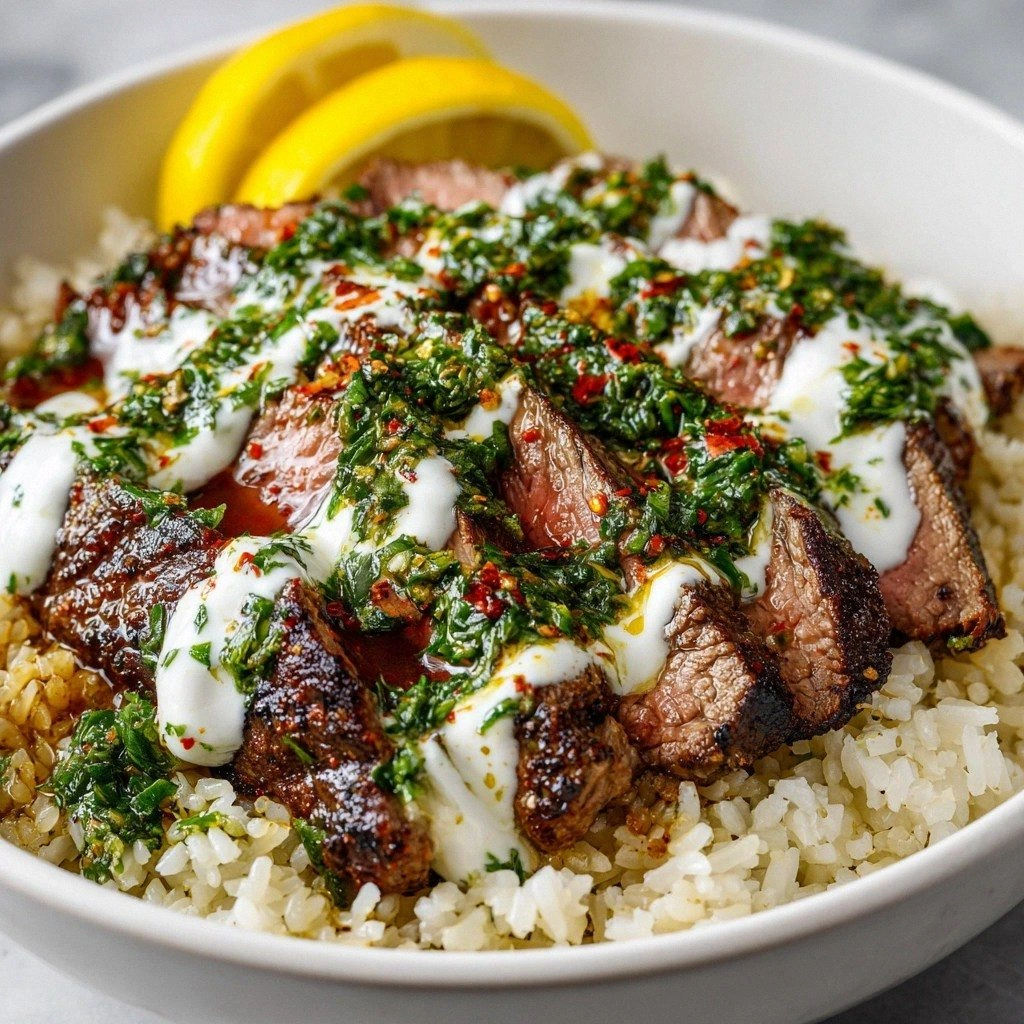
What makes this version of a classic steak bowl stand out isn’t just the bold flavors; it’s the way each component is elevated to a new level of culinary artistry. The chimichurri isn’t a thin sauce—it’s a vibrant, herb‑rich emulsion that clings to the meat like a second skin, delivering a punch of freshness with every bite. The Greek yogurt drizzle adds a silky, cool counterpoint that softens the heat and balances the richness of the steak. And the base—whether it’s fluffy quinoa or a bed of jasmine rice—absorbs every drop of sauce, turning the bowl into a symphony of textures and tastes.
I dare you to taste this and not go back for seconds, because once you’ve experienced the way the bright lemon zest lifts the entire dish, you’ll be hooked. Most recipes get this completely wrong, focusing on either the meat or the sauce but never marrying them in perfect harmony. Picture yourself pulling this out of the pan, the whole kitchen smelling incredible, and watching your guests’ eyes widen as the first spoonful hits their tongues. Let me walk you through every single step—by the end, you’ll wonder how you ever made it any other way.
What Makes This Version Stand Out
- Taste: The chimichurri is a flavor explosion—herbs, garlic, vinegar, and pepper flakes combine into a sauce that’s both tangy and aromatic, turning a simple steak into a headline act.
- Texture: The steak’s seared crust provides a satisfying crunch, while the yogurt drizzle melts into a silky coating that keeps the meat moist and tender.
- Simplicity: Five core ingredients and one pan are all you need, making this dish a go‑to for weeknight dinners or a quick crowd‑pleaser.
- Uniqueness: The yogurt drizzle is a secret twist that most chimichurri recipes overlook, adding a creamy, cooling element that balances the heat.
- Crowd Reaction: Friends who’ve tried this version often say, “I can’t believe this is homemade,” and they’re right—this bowl delivers restaurant‑level flavor.
- Ingredient Quality: Fresh, high‑quality herbs and a good olive oil are essential; they’re the backbone that lets the sauce shine.
- Cooking Method: Quick searing followed by a resting period ensures the steak stays juicy, while the chimichurri is blended to the perfect consistency.
- Make‑Ahead Potential: The sauce can be prepared in advance and refrigerated, and the steak can be sliced and stored, making this dish ideal for meal prep.
Alright, let's break down exactly what goes into this masterpiece...
Inside the Ingredient List
The Flavor Base
Fresh parsley is the star of the chimichurri; its bright green color and peppery bite give the sauce its signature vibrancy. The parsley’s essential oils release when you crush the leaves, creating a depth of flavor that can’t be replicated with dried herbs. If you’re short on parsley, a mix of cilantro and basil can offer a slightly different but still delicious profile. The quality of the parsley matters—look for firm, glossy leaves without yellowing or wilting.
The Texture Crew
Olive oil is the binder that turns the chopped herbs into a silky emulsion. Use a good quality extra‑virgin olive oil for the best flavor, but if you’re in a pinch, a lighter olive oil will still do the job. The oil’s fat content helps the sauce coat the steak evenly, creating a glossy finish that looks as good as it tastes. If you’re aiming for a lighter version, drizzle a tablespoon of toasted sesame oil for an unexpected nutty note.
The Unexpected Star
Greek yogurt is the creamy, cool counterpoint that balances the heat from the red pepper flakes and the richness of the steak. Its tanginess cuts through the fattiness of the meat, leaving each bite refreshing. The yogurt’s protein content adds a nutritional boost, making this bowl both satisfying and wholesome. If you’re dairy‑free, substitute with coconut yogurt or a tahini‑based sauce for a different but equally delightful experience.
The Final Flourish
Red wine vinegar adds a sharp acidity that brightens the entire dish, while a splash of lemon juice gives the yogurt drizzle a zesty lift. Garlic provides depth and aroma; minced or crushed, it integrates seamlessly into the chimichurri. Salt and pepper are essential for seasoning, but be sure to taste as you go—too much salt can drown the herbs. Finally, cooked rice or quinoa serves as the hearty base that soaks up every drop of sauce, turning the bowl into a complete, protein‑packed meal.
Everything's prepped? Good. Let's get into the real action...
The Method — Step by Step
- Begin by seasoning your steak generously on both sides with salt, pepper, and a pinch of red pepper flakes. Let it sit at room temperature for about 10 minutes; this helps the steak cook evenly and makes it easier to sear.
- Heat a heavy skillet or cast‑iron pan over high heat until it starts to smoke. Add a splash of olive oil and swirl to coat the bottom. Place the steak in the pan and let it sear without moving for 2–3 minutes on each side, depending on thickness.
- Flip the steak and sear the other side, then reduce the heat to medium. Add a knob of butter and a few garlic cloves to the pan, letting the butter melt and the garlic infuse the oil. Use a spoon to baste the steak with the buttery mixture for a minute.
- While the steak rests, start the chimichurri. In a bowl, combine chopped parsley, minced garlic, red pepper flakes, salt, pepper, and a splash of red wine vinegar. Whisk in olive oil until the mixture emulsifies into a thick, glossy sauce.
- Slice the rested steak against the grain into thin strips. This helps keep the meat tender and makes each bite easier to chew.
- In a bowl, combine cooked rice or quinoa with the sliced steak. Drizzle the chimichurri over the top, tossing gently to coat everything evenly.
- Finish the bowl with a generous swirl of Greek yogurt and a squeeze of fresh lemon juice. The yogurt’s coolness cuts through the heat, while the lemon adds a bright, citrusy lift.
- Serve immediately, garnishing with a few whole parsley leaves and a dusting of red pepper flakes for visual appeal. The result is a bowl that looks as good as it tastes.
That's it — you did it. But hold on, I've got a few more tricks that'll take this to another level...
Insider Tricks for Flawless Results
The Temperature Rule Nobody Follows
Many people think a quick sear is enough, but the steak’s internal temperature is what truly matters. Use a meat thermometer to aim for 130°F for medium‑rare or 140°F for medium. This precision keeps the steak juicy and ensures it’s safe to eat. A friend once skipped the thermometer and ended up with a dry, over‑cooked steak that left everyone disappointed.
Why Your Nose Knows Best
Trust your nose to judge when the steak is done. As the meat cooks, it releases a rich, savory aroma that signals readiness. If the scent feels too metallic or raw, give it a few more minutes. When the smell is deep and earthy, you’re ready to move on to the next step.
The 5‑Minute Rest That Changes Everything
Resting the steak for exactly five minutes after searing allows the juices to redistribute, preventing them from spilling onto the cutting board. This simple pause transforms a dry steak into a juicy masterpiece. The rest period also gives the chimichurri a chance to meld with the meat’s natural oils.
The Perfect Chimichurri Consistency
Aim for a slightly thick, almost paste‑like consistency in the chimichurri. A runny sauce will drown the flavors, while an overly thick one will be hard to spread. A quick way to check is to dip a spoon into the sauce; it should coat the spoon and hold its shape for a moment before sliding off.
The Yogurt Drizzle Technique
To keep the yogurt from curdling, whisk it with a splash of lemon juice before drizzling. This acid stabilizes the proteins and keeps the texture silky. If you’re in a hurry, simply stir the yogurt with a fork until smooth and drizzle it over the bowl.
The Final Garnish Touch
A sprinkle of toasted pine nuts or chopped almonds adds a delightful crunch that contrasts the tender steak and creamy yogurt. The nuts also bring a subtle nutty flavor that complements the herbaceous chimichurri.
Creative Twists and Variations
This recipe is a playground. Here are some of my favorite ways to switch things up:
Spicy Chipotle Twist
Swap the red pepper flakes for smoked chipotle powder and add a dash of chipotle mayo to the yogurt drizzle. The smoky heat pairs beautifully with the savory steak and brightens the entire bowl.
Mediterranean Quinoa Bowl
Use quinoa instead of rice and toss in diced cucumbers, cherry tomatoes, and kalamata olives. The cool vegetables balance the steak’s richness, while the olives add briny depth.
Breakfast‑Style Skillet
Serve the steak and chimichurri over scrambled eggs and a side of roasted potatoes. This variation turns the dish into a hearty, protein‑rich breakfast that’s perfect for weekend brunches.
Vegetarian Chimichurri Bowl
Replace the steak with grilled portobello mushrooms or marinated tofu. The mushrooms’ meaty texture and the tofu’s protein make a satisfying plant‑based alternative.
Asian‑Inspired Noodle Bowl
Swap the rice for soba noodles and drizzle a soy‑based chimichurri. Add shredded carrots and sliced scallions for crunch and color.
Dessert‑Inspired Sweet & Spicy
Add a drizzle of honey to the yogurt and sprinkle a pinch of cayenne pepper. The sweet heat creates a unique flavor profile that’s surprisingly delightful.
Storing and Bringing It Back to Life
Fridge Storage
Store the cooked steak and rice separately in airtight containers. Keep the chimichurri and yogurt drizzle in a small container with a tight lid. When you’re ready to eat, reheat the steak in a skillet over low heat, then combine all components.
Freezer Friendly
Freeze the steak, rice, and chimichurri separately in freezer‑safe bags. When reheating, thaw overnight in the fridge, then warm each component on the stove or in the microwave. The yogurt should be added fresh to avoid curdling.
Best Reheating Method
Reheat the steak and rice on low heat, stirring occasionally, until warmed through. Add a splash of water or broth to keep the rice moist. Finish by whisking in a small amount of yogurt and lemon juice to restore freshness.
Add a tiny splash of water before reheating, and it steams back to perfection, keeping the grains fluffy and the flavors bright.