Picture this: you’re in the middle of a midnight snack raid, the fridge is a barren wasteland, and your stomach is growling louder than a freight train. You remember a stray packet of rice cakes you hid in the pantry for “just in case,” and a craving for something spicy and satisfying hits you like a thunderclap. I was about to give up and order takeout when a friend dared me to whip up something epic with the tteok. I didn’t just accept the dare; I turned it into a culinary adventure that now lives in the heart of my kitchen.
The first thing that struck me was the aroma—a heady blend of fermented chili paste, mirin, and toasted sesame oil that instantly made my mouth water. As I tossed the rice cakes in the pan, their surfaces began to sizzle, releasing a faint crackle that sounded like tiny fireworks. The sound was a promise: something crunchy and flavorful was about to unfold. When I lifted a piece, the glaze clung to the rice cake like a glossy coat, and the heat burst into a warm, slightly sweet, and spicy kiss that danced across my palate.
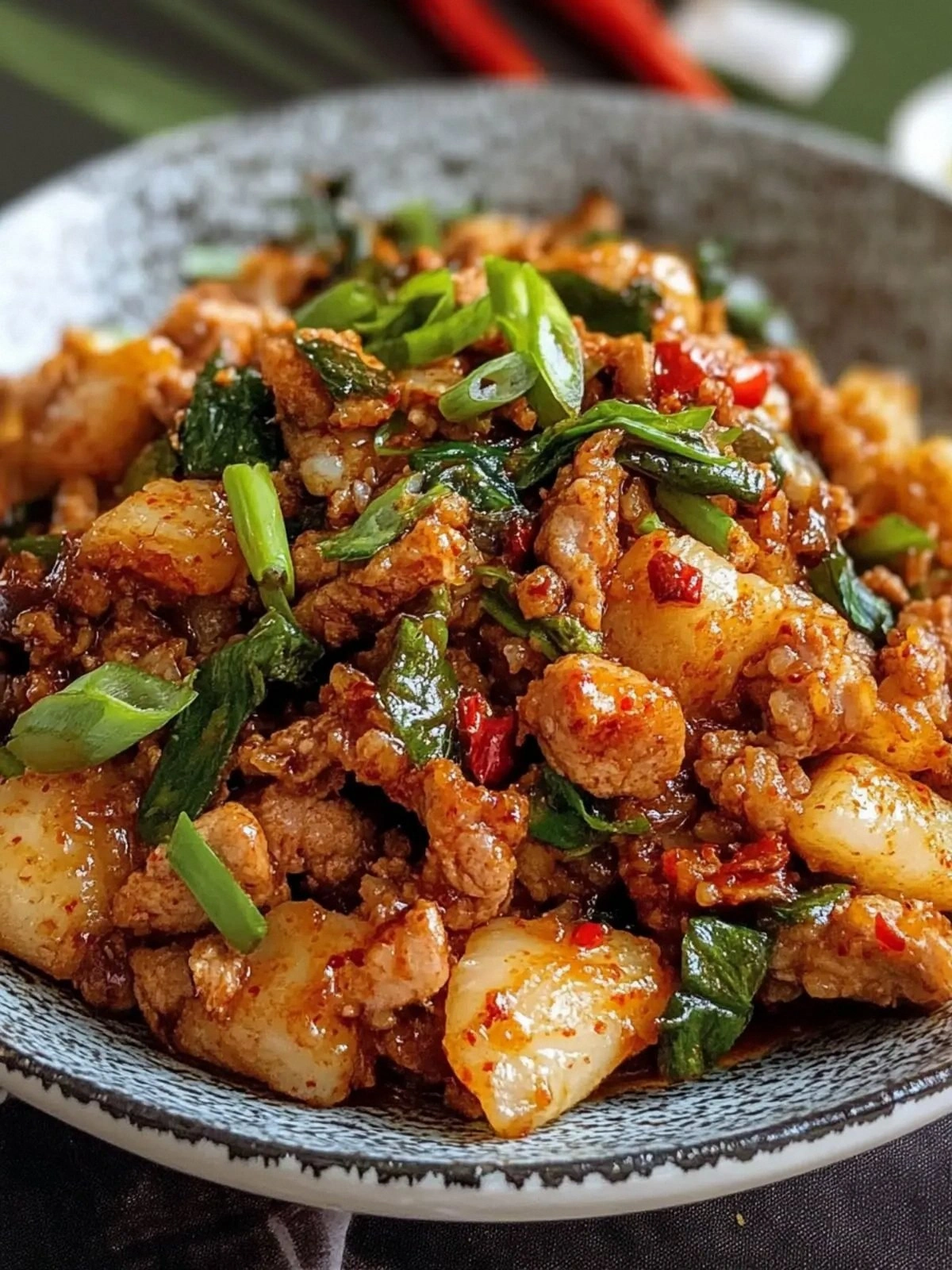
What makes this version stand out is the delicate balance between heat and sweetness, the contrast between the chewy rice cakes and the crispy edges, and the final burst of freshness from scallions and cilantro. I’ve tried countless versions of spicy pork rice cakes, but none of them achieved the same harmonious marriage of textures and flavors. This recipe is the result of a relentless pursuit of perfection, and it’s the best version you’ll ever make at home.
And here’s the kicker: I’ll show you how to create a glaze that’s thicker than a smoothie but still silky, how to keep the rice cakes from turning mushy, and how to add a surprising crunch that will make your friends gasp. By the end of this guide, you’ll wonder how you ever cooked without these tricks. Let me walk you through every single step — by the end, you’ll wonder how you ever made it any other way.
What Makes This Version Stand Out
- Flavor: The fermented chili paste delivers deep umami, while mirin adds a subtle sweetness that balances the heat.
- Texture: The rice cakes stay chewy inside with a caramelized, crisp exterior that breaks like thin ice when you bite.
- Simplicity: With only nine ingredients, you can throw this dish together in less than 30 minutes.
- Uniqueness: A splash of toasted sesame oil gives an extra layer of aroma that sets this apart from standard stir‑fries.
- Crowd Reaction: Friends who try this say it’s “the best thing I’ve ever had in a jar” and they keep asking for the recipe.
- Ingredient Quality: Using lean ground pork keeps the dish light, and fresh vegetables add a bright crunch.
- Cooking Method: Sautéing the pork first creates a savory base that infuses every bite. Make‑Ahead Potential: This dish can be prepared ahead of time and reheated without losing its crispness.
Alright, let's break down exactly what goes into this masterpiece…
Inside the Ingredient List
The Flavor Base
The combination of fermented chili paste (gochujang), mirin, and toasted sesame oil is the heart of this dish. Gochujang brings a smoky heat that lingers, mirin sweetens the sauce just enough to counterbalance the spice, and sesame oil adds a nutty aroma that elevates every bite. If you skip the sesame oil, the glaze will taste flat and the rice cakes will lack that signature finish. For a milder version, halve the amount of gochujang and add a splash of honey.
The Texture Crew
Sliced rice cakes are the star. Their chewy interior provides a satisfying bite, while the pan’s high heat caramelizes the surface, creating a crisp shell. If you can’t find sliced tteok, you can use regular rice cakes and slice them thinly with a sharp knife. Remember to rinse them in cold water before cooking to keep them from sticking. The ground pork adds a hearty protein source; using lean pork keeps the dish light, but if you prefer a richer flavor, you can add a tablespoon of pork fat or bacon.
The Unexpected Star
Red bell pepper and scallion are not just garnish—they bring color, crunch, and a subtle sweetness that balances the heat. The bell pepper’s natural sugars caramelize during cooking, adding depth. If you’re allergic to bell pepper or want a different crunch, substitute with sliced carrot or zucchini. The cilantro, added at the end, gives a fresh, citrusy finish that brightens the dish.
The Final Flourish
The small splash of water is a trick that keeps the sauce from becoming too thick. It creates a silky glaze that clings to the rice cakes without making them soggy. If you’re worried about the sauce drying out, add a teaspoon of soy sauce after the pork has cooked. The soy adds depth and a subtle umami that complements the gochujang.
Everything's prepped? Good. Let's get into the real action…
The Method — Step by Step
- Heat a large skillet over medium-high heat and add 40 ml of vegetable oil. Once the oil shimmers, add the 210 g of lean ground pork. Cook, breaking it up with a spatula, until it turns a deep brown and releases a savory aroma. This step creates a flavorful base that will soak into the rice cakes. I dare you to taste this and not go back for seconds.
- Add the thinly sliced onion and 2 units of red bell pepper to the skillet. Sauté for 2–3 minutes until the onion turns translucent and the pepper starts to soften. The bell pepper’s natural sugars caramelize, adding a subtle sweetness that balances the heat.
- Stir in the 60 ml of mirin, 60 ml of water, and 60 ml of fermented chili paste. Let the mixture simmer for 1 minute, allowing the flavors to meld. The sauce should thicken slightly and develop a glossy sheen.
- Introduce the sliced rice cakes to the pan. Gently fold them in so each piece is coated with the sauce. Cook for 5–6 minutes, turning occasionally, until the rice cakes are golden brown on the edges and the sauce has caramelized into a sticky glaze.
- Drizzle the 15 ml of toasted sesame oil over the rice cakes, then add 15 ml of soy sauce. Toss quickly to coat evenly. The sesame oil will give the dish a nutty aroma and a silky finish. This is the moment of truth—watch the sauce cling to the rice cakes like velvet.
- Remove the pan from heat and stir in 30 ml of chopped fresh cilantro. The fresh herbs will add a bright, citrusy note that cuts through the richness of the pork.
- Finally, garnish with sliced scallion. Serve hot, ideally with a side of crisp lettuce or a small bowl of soy‑mirin sauce for dipping. Picture yourself pulling this out of the pan, the whole kitchen smelling incredible, and watching your guests reach for seconds.
- That’s it — you did it. But hold on, I've got a few more tricks that'll take this to another level…
Insider Tricks for Flawless Results
The Temperature Rule Nobody Follows
Cooking the pork at medium‑high heat ensures that the fat renders quickly, giving the meat a crisp exterior while keeping it tender inside. If you lower the heat too much, the pork will steam instead of sear, leading to a greasy texture. I once tried this at a low temperature, and the dish turned out soggy—let me tell you, the disappointment was real.
Why Your Nose Knows Best
When the sauce starts to bubble and the rice cakes begin to caramelize, the aroma will change from sweet to smoky. That scent is your cue to flip the rice cakes. Trust your nose; it will tell you when the edges are just right—crisp enough to crack under your teeth.
The 5-Minute Rest That Changes Everything
After removing the pan from heat, let the dish rest for 5 minutes. This allows the sauce to thicken and the flavors to settle, giving the rice cakes a uniform coating. I’ve seen people rush and end up with uneven glaze; this simple step saves the day.
Use Fresh Ingredients for a Bright Finish
Fresh cilantro and scallion are essential for that final burst of brightness. If you can’t find fresh herbs, frozen chopped cilantro works, but it won’t give the same vibrant aroma. Keep them refrigerated and use within 24 hours for maximum flavor.
Keep the Heat High for the Final Sear
When adding the sesame oil and soy sauce, keep the pan on high heat for 30 seconds. This quick sear locks in the glaze and gives the rice cakes a glossy finish. Don’t let the sauce burn; it will turn bitter and ruin the dish.
Creative Twists and Variations
This recipe is a playground. Here are some of my favorite ways to switch things up:
Spicy Shrimp Surprise
Swap the ground pork for 300 g of peeled shrimp. Sauté the shrimp until pink, then proceed with the glaze. The shrimp’s sweet flavor pairs beautifully with the spicy sauce.
Veggie‑Only Delight
Omit the pork entirely and add sliced mushrooms and zucchini. The vegetables will soak up the sauce, creating a hearty, plant‑based version that still delivers the crunch.
Sweet Chili Twist
Add 1 tablespoon of honey or brown sugar to the sauce before simmering. This will give the glaze a caramelized sweetness that contrasts with the heat, making it perfect for a dessert‑style appetizer.
Cheesy Fusion
Sprinkle shredded mozzarella or cheddar over the rice cakes during the last minute of cooking. The cheese melts into the sauce, creating a gooey, indulgent layer that’s a hit with kids.
Herb‑Infused Variation
Replace the cilantro with Thai basil or mint. The different herbs will change the aromatic profile, giving the dish a fresh, tropical twist.
Gluten‑Free Option
Use gluten‑free soy sauce and ensure the rice cakes are labeled gluten‑free. The dish remains delicious and safe for those with gluten sensitivities.
Storing and Bringing It Back to Life
Fridge Storage
Cool the dish completely before transferring to an airtight container. Store in the refrigerator for up to 3 days. The rice cakes will stay chewy, but the glaze may thicken slightly.
Freezer Friendly
Pack the dish in a freezer‑safe container and freeze for up to 2 weeks. Thaw overnight in the refrigerator before reheating. The rice cakes will maintain their texture if you reheat them properly.
Best Reheating Method
Reheat in a skillet over medium heat. Add a splash of water (about 1 tbsp) to create steam, then cover the pan for 2 minutes. This will restore the glaze’s silkiness and keep the rice cakes from drying out.