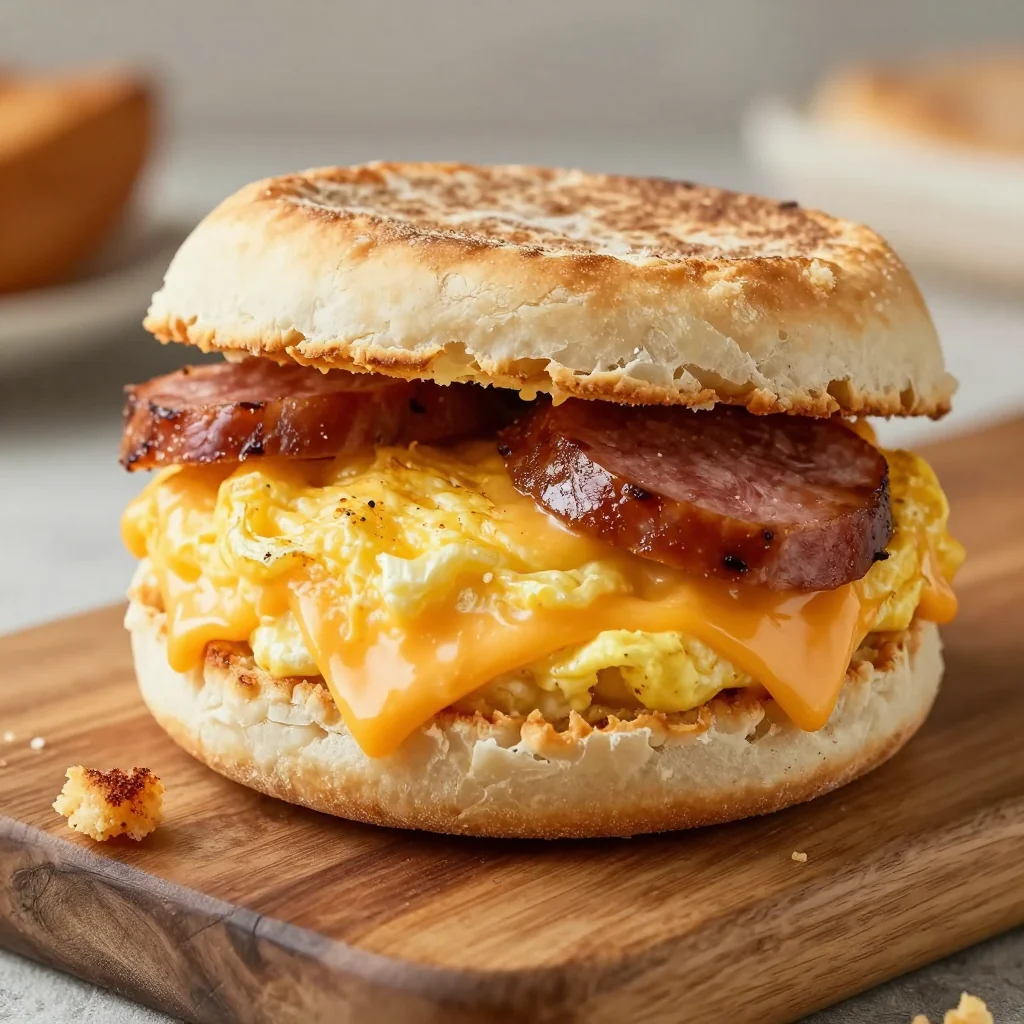
Love this? Pin it for later! 📌
January mornings hit different. The twinkle lights are boxed away, the air is crisp, and the alarm clock feels like it’s ringing five minutes earlier every day. I created these freezer-friendly breakfast sandwiches during the first blizzard of the year, when my kids had a two-hour delay, my husband was racing to beat the traffic, and I was still in my robe clutching a mug of coffee that had gone tepid. I needed something hot, hearty, and handheld—something I could pass out like edible permission slips to face the day. One batch later, we were hooked. Now I make a double dozen on the last Sunday of every month, and the sandwiches quietly wait in the freezer like breakfast bodyguards. If your January feels like a sprint that starts in the dark, let these sandwiches be your baton.
Why This Recipe Works
- Sheet-Pan Eggs: One bake, twelve perfect rounds—no floppy folded eggs here.
- Cheese Barrier: A slice on both the top and bottom prevents soggage during reheat.
- Canadian Bacon: Leaner than sausage, still smoky, and it lies flat for tidy stacking.
- English Muffin Split: Fork-split muffins create nooks that grip the melted cheese.
- Parchment Wraps: Each sandwich is swaddled like a gift so frost never touches the bread.
- 90-Second Reheat: Straight from frozen to microwave with zero rubbery surprises.
- Customizable: Swap the meat, add spinach, or go meatless—everything freezes the same.
Ingredients You'll Need
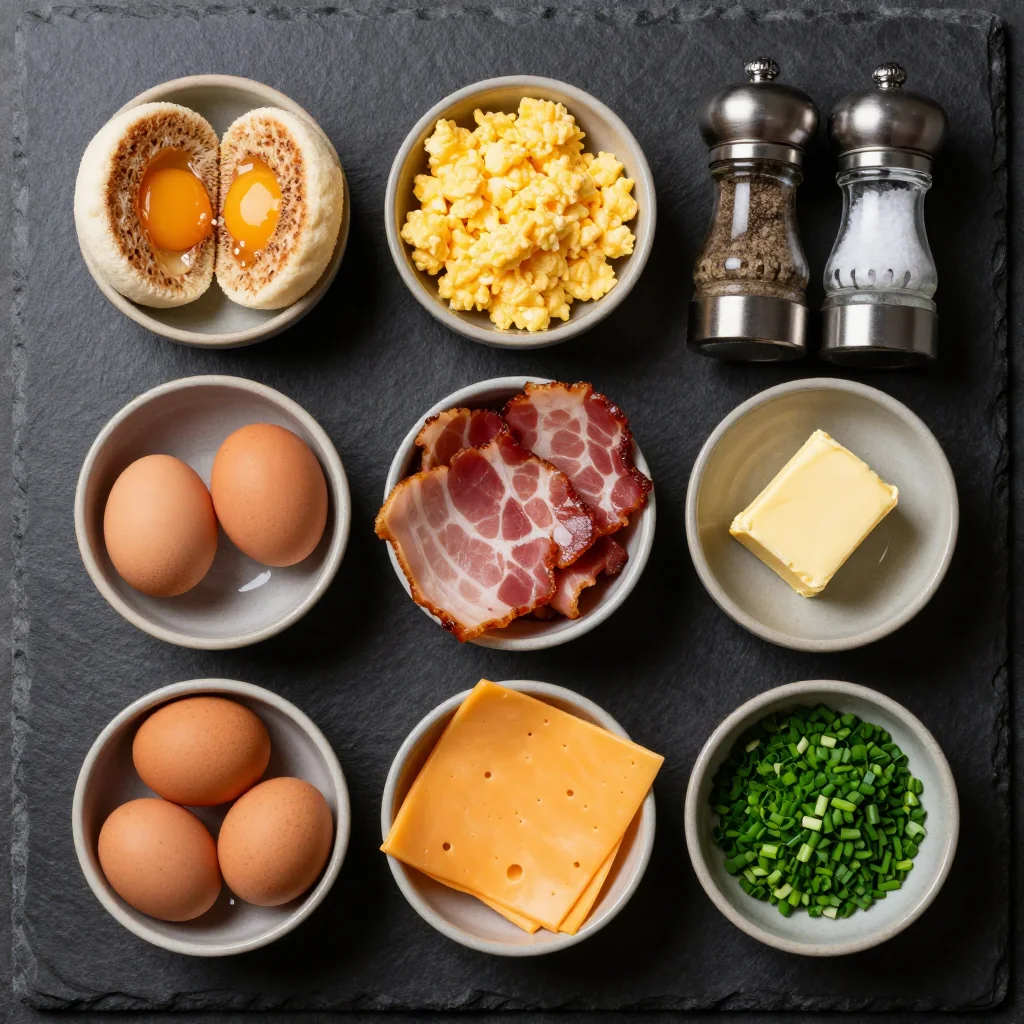
Quality ingredients are the quiet heroes of freezer cooking. Because these sandwiches will be reheated, every flavor needs to start bold and finish friendly.
English Muffins: Look for bakery-style muffins with irregular holes—those pockets trap steam and keep the crumb tender. I buy the multigrain version for nutty sweetness, but sourdough or classic white work just as well. Avoid “sandwich thin” styles; they disintegrate under the weight of egg and cheese.
Eggs: Farm-fresh if you can swing it. The yolks are sunset-orange and the whites whip up fluffier. If you’re shopping supermarket, grab a dozen large, not extra-large; large eggs fit the muffin circumference perfectly.
Milk: A tablespoon per egg. Whole milk keeps the sheet-pan eggs supple after freezing, but 2 % is fine. Skip skim—it steams rather than creams.
Canadian Bacon: This lean oval is the MVP of flat-pack protein. Choose nitrate-free brands; the smoky note is still there without the ham-fisted saltiness. Vegetarian? Swap in thin slices of marinated tofu or a roasted portobello strip.
Cheese: Pre-sliced medium cheddar melts evenly and doesn’t separate when frozen. If you’re a Swiss lover, go for it—just avoid fresh mozzarella (too much water) or aged parmesan (not enough fat).
Seasonings: A whisper of salt, pepper, and garlic powder in the eggs is all you need. If you like heat, add a pinch of smoked paprika; it echoes the Canadian bacon and looks gorgeous in the cross-section.
How to Make Freezer-Friendly Breakfast Sandwiches for Busy January Mornings
Preheat & Prep
Heat oven to 350 °F. Line an 11 × 17-inch rimmed sheet pan with parchment, leaving a 2-inch overhang on the long sides. Grease the parchment and the exposed sides of the pan with butter or non-stick spray—eggs love to weld themselves to metal.
Whisk the Eggs
Crack 12 eggs into a large bowl. Add ½ cup milk, 1 tsp kosher salt, ½ tsp black pepper, and ¼ tsp garlic powder. Whisk until the mixture is homogenous and slightly frothy—about 45 seconds. Froth equals lift, and lift equals sandwiches that don’t feel like door stops.
Bake the Egg Sheet
Pour the egg mixture into the prepared pan. Tilt to distribute evenly. Sprinkle ½ cup shredded cheddar across the top—this creates a cheesy “skin” that prevents sticking when you portion. Bake 12–14 minutes, until the center barely jiggles and the edges pull away from the sides. Cool 5 minutes.
Portion the Eggs
Lift the parchment onto a cutting board. Using a 3 ½-inch biscuit cutter (or the rim of a wide-mouth mason jar), cut 12 rounds. The scraps make great dog treats or toddler finger food—zero waste, full mom points.
Toast the Muffins
Split 12 English muffins with a fork to preserve the craggy texture. Lay them cut-side-up on two sheet pans. Slide under the broiler for 90 seconds—just until the edges turn golden. This step drives off surface moisture so the sandwiches don’t taste like freezer.
Assemble the Stack
On the bottom muffin half, place one slice of cheddar, one egg round, one slice of Canadian bacon, a second slice of cheddar, and the top muffin. Press gently. The dual-cheese tactic seals the bread and keeps the egg from sliding like a hockey puck.
Wrap for the Freezer
Tear twelve 10-inch squares of parchment. Center a sandwich on each square, bring the corners up, and twist to seal like a giant candy. Follow with a 12-inch square of heavy-duty foil. Label with a Sharpie: “Egg & Cheddar – 90 sec” so babysitters know the drill.
Flash-Freeze
Arrange the wrapped sandwiches on a sheet pan in a single layer. Freeze 2 hours—this prevents them from glomming together later. Transfer to a gallon zip-top bag; squeeze out excess air. Store up to 3 months, though they rarely survive the month in my house.
Reheat & Run
Unwrap foil (keep parchment on). Microwave on high 90 seconds if frozen, 45 seconds if thawed. For a crisper muffin, pop into the toaster oven at 400 °F for 5 minutes after microwaving. Let stand 1 minute—molten cheese lava is real.
Expert Tips
Cool Before Wrapping
Warm sandwiches create steam pockets that freeze into ice crystals. Let everything come to room temp for 20 minutes—your future self will thank you.
Size Your Cutter
If your muffins are the jumbo “sandwich size,” use a 4-inch cutter and stretch the bacon slice to fit. Consistency equals even reheating.
Butter the Top
Before the final foil wrap, brush the top muffin with ¼ tsp melted butter. It browns in the microwave and tastes like it came off a diner griddle.
Date the Bag
Use masking tape and a Sharpie to write the freeze date. After 3 months the bread texture drifts toward cardboard.
Crisp Hack
Pop the microwaved sandwich into a dry skillet for 30 seconds per side. You’ll get buttery crunch without extra dishes.
Batch Multiplier
Double the recipe using two sheet pans, rotating racks halfway. You’ll have 24 sandwiches in under an hour—enough to share with new-parent neighbors.
Variations to Try
-
Southwest Sunrise
Whisk ¼ cup salsa into the eggs and substitute pepper-jack. Add a roasted poblano strip under the bacon for smoky heat.
-
Caprese Morning
Swap Canadian bacon for thin prosciutto, use fresh mozzarella slices, and tuck in a basil leaf. Freeze the leaf—it revives like a dream.
-
Green Goddess
Blend ½ cup baby spinach into the egg mixture for St. Patrick’s Day vibes. Kids think it’s “Hulk bread” and eat it anyway.
-
Everything Bagel
Brush muffins with egg wash and sprinkle with Everything seasoning before toasting. Swap cheddar for horseradish cheddar for a morning kick.
-
Gluten-Free
Use gluten-free English muffins (I like Canyon Bakehouse). Wrap in parchment only; foil can react with some GF flours and turn gray.
Storage Tips
Freezer: Wrapped sandwiches keep for 3 months at 0 °F. Store flat for the first 24 hours, then pile vertically like books to save space. If you vacuum-seal, reduce reheat time to 70 seconds.
Fridge: Assembled sandwiches can be refrigerated (wrapped) for up to 4 days. Reheat 45 seconds in microwave or 8 minutes at 350 °F in toaster oven.
Thaw Overnight: Move a sandwich to the fridge before bed. In the morning, microwave 30 seconds and crisp in skillet 1 minute.
Lunchbox Trick: Pack a frozen sandwich in an insulated bag; it thaws by noon and can be reheated in a cafeteria microwave.
Frequently Asked Questions
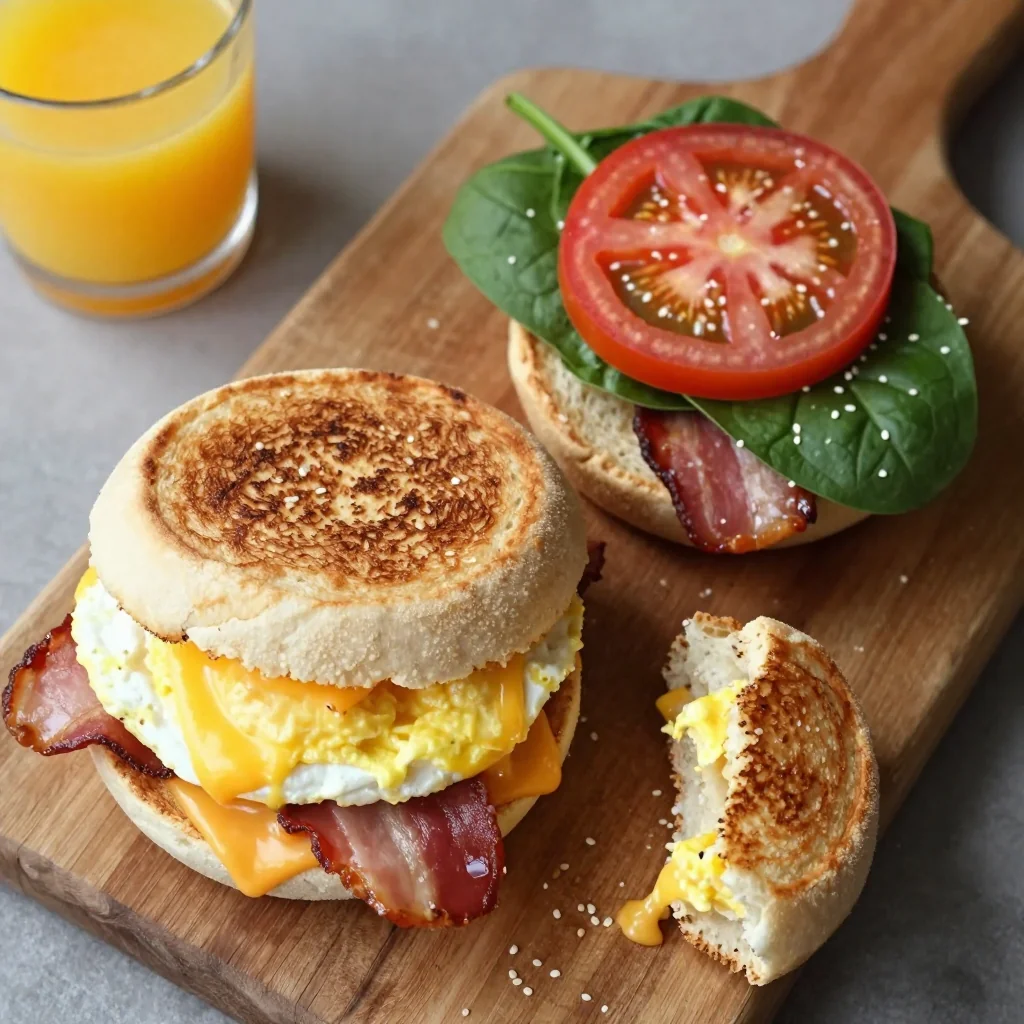
Freezer-Friendly Breakfast Sandwiches for Busy January Mornings
Ingredients
Instructions
- Preheat & Prep: Heat oven to 350 °F. Line an 11 × 17-inch rimmed sheet pan with parchment, leaving an overhang. Grease generously.
- Whisk Eggs: Beat eggs, milk, salt, pepper, and garlic powder until frothy. Pour into pan; bake 12–14 min until just set. Cool 5 min.
- Cut Rounds: Using a 3 ½-inch cutter, cut 12 egg rounds. Toast muffin halves under broiler 90 seconds.
- Assemble: Layer bottom muffin, cheddar slice, egg round, Canadian bacon, second cheddar slice, top muffin.
- Wrap: Wrap each sandwich in parchment, then foil. Freeze on a sheet pan 2 hours, then store in zip-top bag.
- Reheat: Microwave 90 seconds from frozen or 45 seconds if thawed. Optionally crisp in skillet 1 minute per side.
Recipe Notes
For extra decadence, slip a thin tomato slice between the cheeses before freezing. Pat it dry first to avoid sogginess.