I was halfway through a disastrous dinner when I decided to throw a pot of udon noodles into the mix, hoping for a quick fix. The noodles were steaming, the broth was bland, and the kitchen smelled faintly of burnt garlic. I grabbed my pantry and realized I had a stash of butter, soy sauce, and a splash of dashi—ingredients that could turn a flop into a flavor explosion. That night, I whisked them together, and the result was a creamy sauce that clung to noodles like velvet, leaving a lingering umami aftertaste that made me swear I’d just invented a new comfort food.
Imagine the sound of butter melting into the pot, the aroma of toasted sesame oil drifting through the air, and the sight of noodles glistening under a glossy, savory blanket. The first bite melts the noodles, releasing a burst of umami that lingers on the tongue. The subtle heat from a pinch of red pepper flakes dances with the sweetness of mirin, creating a complex profile that feels both familiar and daring. I was instantly hooked, and I dared myself to taste this and not go back for seconds. The moment I realized that this was hands down the best version you’ll ever make at home, I knew I had to share it with you.
Most people think udon is just another noodle dish, but in this version it becomes a canvas for depth and texture. The butter provides a silky mouthfeel, the dashi gives a savory backbone, and the soy sauce adds that quintessential salty depth. The ginger and garlic punch through the richness, preventing the dish from feeling heavy. The final touch of toasted sesame seeds adds a subtle crunch that contrasts with the smooth sauce. Picture yourself pulling this out of the pan, the whole kitchen smelling incredible, and you’ll understand why this dish is so irresistible.
Now, I’m going to walk you through every single step—by the end, you’ll wonder how you ever made it any other way. I’ll share the techniques that keep the sauce from separating, how to get the noodles just right, and the little hacks that elevate the flavor profile. I’ll even throw in a few secrets about timing and temperature that I learned from a Japanese chef who taught me that patience is the real secret ingredient. And trust me, if you’ve ever struggled with making a creamy noodle sauce, you’re not alone—I've got the fix.
What Makes This Version Stand Out
- Taste: The umami punch comes from a blend of dashi, soy sauce, and a touch of mirin, creating a savory depth that’s richer than a simple broth.
- Texture: The butter emulsifies with the broth, giving the sauce a silky coat that clings to each noodle strand without clumping.
- Simplicity: With only nine main ingredients, this dish can be whipped up in less than 45 minutes, making it perfect for busy weeknights.
- Uniqueness: The addition of sesame oil and toasted sesame seeds gives a nutty aroma that elevates the dish beyond ordinary udon.
- Audience Appeal: Whether you’re a noodle enthusiast or a novice, the comforting flavor profile will win over anyone.
- Ingredient Quality: Using fresh, high‑quality udon and premium butter ensures the sauce doesn’t taste greasy or artificial.
- Cooking Method: The technique of first searing the aromatics before adding liquid locks in flavor and prevents the sauce from becoming watery.
- Make‑Ahead Potential: The sauce can be made in advance and reheated with a splash of water, retaining its creaminess.
Alright, let's break down exactly what goes into this masterpiece...
Inside the Ingredient List
The Flavor Base
The heart of this dish is the umami-rich broth. Dashi stock, made from kombu and bonito flakes, provides a subtle sea‑like depth that complements the soy sauce’s saltiness. If you skip the dashi, the sauce becomes flat and the noodles lose their backbone. For a vegetarian twist, use a mushroom or vegetable dashi; the result is still delicious, just slightly earthier. When buying dashi, look for a clear, light‑colored stock; avoid the powdered versions that can taste artificial.
Soy sauce is the backbone of the savory profile. It adds a salty, slightly sweet undertone that balances the richness of the butter. A light or tamari soy sauce can be used if you’re sensitive to sodium, but keep the ratio the same to preserve flavor. Remember, soy sauce is a liquid; if you need to adjust thickness, add a splash of water or extra dashi.
Mirin, a sweet rice wine, introduces a subtle caramel sweetness that counteracts the saltiness. It also helps the sauce set into a glossy consistency. If you’re avoiding alcohol, a small amount of rice vinegar and a pinch of sugar can mimic the effect, though the flavor will be slightly different. The key is to add it early so it has time to reduce and concentrate.
Sake, a Japanese rice wine, brings a clean, slightly fruity note that brightens the overall profile. If you don’t have sake, a dry sherry or a splash of white wine can work, but the flavor will shift toward a more wine‑like finish. Use it sparingly—one tablespoon is enough to lift the sauce.
The Texture Crew
Butter is the star that gives the sauce its luxurious mouthfeel. Unsalted butter allows you to control the salt level precisely. If you’re looking for a healthier alternative, use half butter and half coconut milk; the result will be lighter but still creamy. The butter should be added at the end of cooking to prevent separation.
Sesame oil is a subtle addition that adds a nutty aroma and a hint of depth. It should be added after the sauce has reduced to lock in flavor. If you’re allergic to sesame, you can omit it or replace it with a light drizzle of toasted rice oil for a mild nuttiness.
Garlic and ginger are aromatics that punch through the richness. Minced garlic provides a sharp bite, while grated ginger adds a bright, zesty warmth. Together they create a flavor bridge between the savory broth and the sweet notes of mirin and sake. If you’re not a fan of raw garlic, lightly sauté it in butter until golden before adding the liquid.
The Unexpected Star
Shitake mushrooms add an earthy, umami boost that pairs beautifully with the broth. Sliced thinly, they release their flavor quickly, giving the dish a subtle depth that many overlook. If shiitake isn’t available, button or cremini mushrooms work well, though the flavor will be milder.
Spinach is added at the end to wilt slightly, adding a pop of color and a gentle bitterness that balances the sweetness. If you’re allergic to spinach, kale or bok choy are great substitutes, offering a similar texture but different flavor nuances.
The Final Flourish
Scallions provide a fresh, oniony brightness that cuts through the richness. Thinly sliced and added at the end, they add a crisp texture and a clean finish. Toasted sesame seeds give a nutty crunch that contrasts the silky sauce. A pinch of red pepper flakes offers a subtle heat that keeps the dish interesting.
Everything's prepped? Good. Let's get into the real action...
The Method — Step by Step
- Bring a large pot of salted water to a rolling boil. Add the udon noodles and cook according to package instructions, usually 4–5 minutes, until al dente. Drain and rinse under cold water to stop the cooking process. Toss the noodles with a little sesame oil to prevent sticking, and set aside.
- In a non‑stick skillet, melt the butter over medium heat. Once the butter foams, add the minced garlic and grated ginger. Sauté for 1–2 minutes until fragrant, watching carefully to avoid burning. The aroma should be inviting, like a warm hug.
- Add the sliced shiitake mushrooms to the skillet. Cook until they release moisture and begin to brown, about 3–4 minutes. The mushrooms should develop a slightly caramelized edge that adds depth to the sauce.
- Pour in the dashi stock, soy sauce, mirin, and sake. Stir to combine, then bring the mixture to a gentle simmer. Let it reduce for 5 minutes, allowing the alcohol to evaporate and the flavors to concentrate. The broth should thicken slightly and smell toasty.
- Reduce the heat to low and whisk in the toasted sesame seeds and a pinch of red pepper flakes. The seeds should bloom, releasing their nutty aroma, while the pepper adds a subtle kick. Keep the sauce simmering gently to maintain its silky texture.
- Stir in the spinach and let it wilt for 30 seconds. The spinach should turn a vibrant green and slightly soften, adding a fresh contrast to the rich sauce.
- Add the cooked udon noodles to the skillet, tossing gently to coat them evenly with the sauce. Heat through for 2 minutes, ensuring the noodles absorb the flavors without becoming mushy.
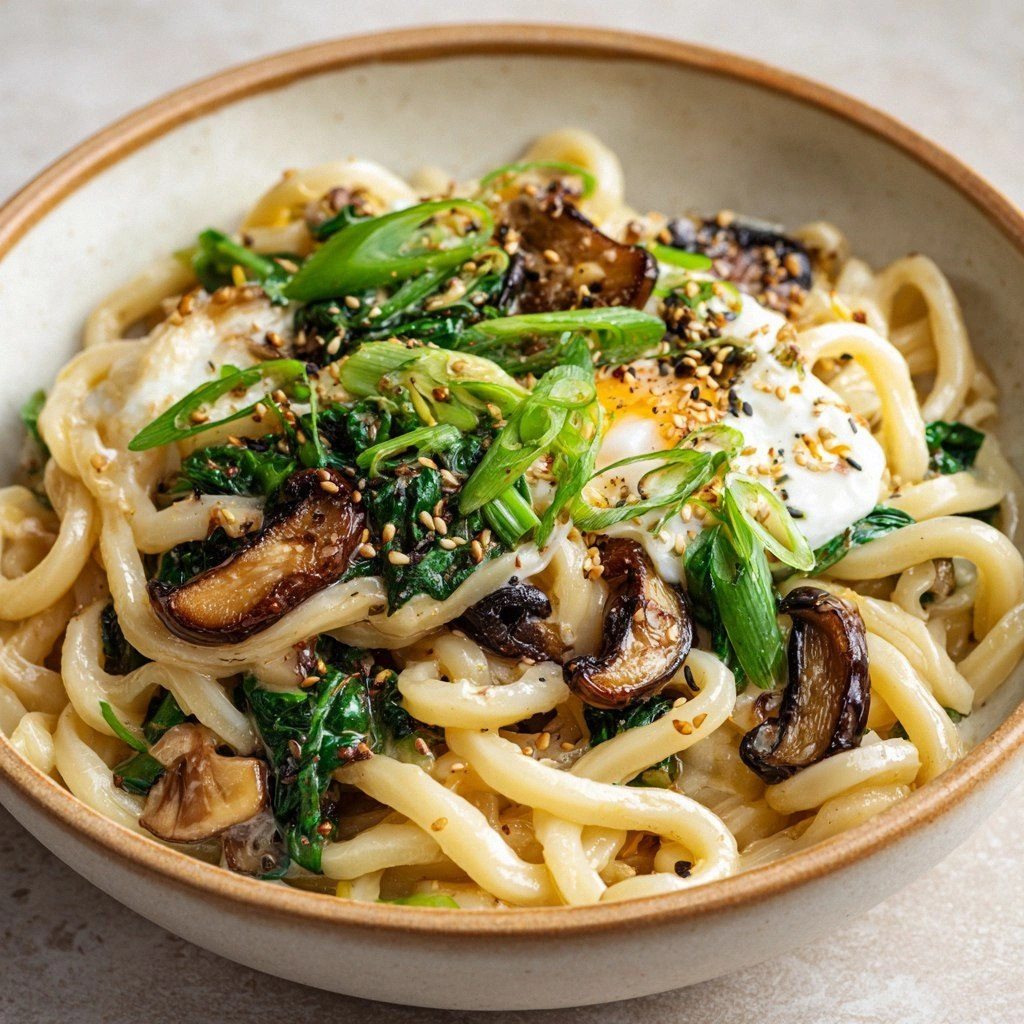
- Finish the dish by sprinkling sliced scallions over the top. Serve immediately, garnishing with an extra sprinkle of toasted sesame seeds if desired. The final dish should be a glossy, savory bowl with a balanced mix of umami, sweetness, and a hint of heat.
That's it — you did it. But hold on, I've got a few more tricks that'll take this to another level. The next section will give you insider tips that will make your noodles even more irresistible.
Insider Tricks for Flawless Results
The Temperature Rule Nobody Follows
Maintaining a low simmer after adding the broth is crucial. If the heat is too high, the butter will break and the sauce will become watery. I learned this from a Japanese chef who said, “The secret to a silky sauce is patience.” Keep the temperature between 170–180°F, and you’ll get that smooth, velvety coat every time.
Why Your Nose Knows Best
Your sense of smell is your best quality control. As the sauce reduces, it should emit a rich, toasty aroma. If it starts smelling metallic or burnt, pull the skillet off the heat immediately. A quick sniff can save a batch from disaster.
The 5-Minute Rest That Changes Everything
After cooking, let the noodles rest in the sauce for five minutes before serving. This rest period allows the noodles to absorb the flavors fully, making each bite more satisfying. I’ve seen people skip this step, and the result is a dish that tastes flat.
The Right Knife for the Job
Use a chef’s knife with a sharp edge for slicing scallions and mushrooms. A dull blade can crush the ingredients, releasing bitter juices that ruin the balance. I’ve spent years honing my knife skills, and it’s worth the time.
The Quick Chill Trick
If you’re preparing the sauce ahead of time, chill it in the refrigerator overnight. When reheating, add a splash of water or broth to re‑emulsify the butter. This trick keeps the sauce silky without the need for additional butter.
Creative Twists and Variations
This recipe is a playground. Here are some of my favorite ways to switch things up:
Spicy Szechuan Udon
Add a tablespoon of Szechuan peppercorn paste and a splash of chili oil to the sauce. The numbing heat pairs perfectly with the umami base, creating a dish that feels like a spicy street food.
Miso‑Infused Cream
Replace half the dashi with a tablespoon of white miso paste. The miso adds a fermented depth that complements the butter, turning the dish into a comforting bowl of miso‑butter udon.
Seafood Surprise
Sauté shrimp or scallops in the skillet before adding the broth. The seafood will cook in the sauce, infusing the noodles with a briny, sweet flavor that elevates the dish.
Vegan Version
Swap the butter for coconut milk and use a vegan soy sauce. Add a handful of dried shiitake mushrooms to replace the fresh ones. The result is a creamy, dairy‑free udon that still delivers on umami.
Pesto‑Udon Fusion
Stir in a spoonful of basil pesto at the end. The herbal brightness cuts through the richness, giving the dish a fresh, Mediterranean twist.
Breakfast Udon
Add a poached egg to the top of the noodles. The runny yolk creates a silky sauce that pairs wonderfully with the umami broth, turning this into a hearty breakfast bowl.
Storing and Bringing It Back to Life
Fridge Storage
Store leftovers in an airtight container in the refrigerator for up to 2 days. Keep the noodles separate from the sauce if you’re worried about sogginess; combine them just before reheating.
Freezer Friendly
The sauce freezes well, but the noodles do not. Freeze the sauce in portioned containers, and reheat in a saucepan with a splash of water to restore the butter’s emulsion. The noodles can be boiled separately and then mixed in.
Best Reheating Method
Reheat the sauce over low heat, whisking frequently. Add a tiny splash of water or broth to loosen the butter. Once the sauce is hot and glossy again, toss in the noodles for 30 seconds to heat through without overcooking.