I was halfway through a midnight snack, eyes bleary from a long work week, when I stared at the empty fridge and thought, “What’s going to kill me tonight?” The answer came in a flash of inspiration: a bowl that feels like a carnival of flavors, a spring roll that’s been given a satay makeover, and a chicken that sings with spice. I was going to make a dish that would make my taste buds do a double-take, and I’m not exaggerating when I say it’s hands down the best version you’ll ever make at home. The idea was simple: take the crispness of a spring roll, the umami of satay, and wrap them in a bowl that’s as comforting as a hug. I dare you to taste this and not go back for seconds.
Picture yourself pulling this out of the oven, the whole kitchen smelling incredible, and hearing the gentle hiss of the pan as the chicken sizzles. The first thing you’ll notice is the aroma of toasted coconut milk and curry powder, a scent that instantly transports you to a bustling street market. The sound of the sauce bubbling is music to a cook’s ears, and the sight of the vibrant green cilantro and the glossy sheen of the satay glaze is a feast for the eyes. The texture is a delightful contrast: tender, juicy chicken, a crispy edge that shatters like thin ice, and a silky sauce that coats every bite like velvet. The last thing you’ll want to do is stop eating.
Most recipes get this completely wrong. They either overcook the chicken until it’s dry, or they under-season the satay sauce until it’s bland. I’ll be honest — I ate half the batch before anyone else got to try it, and that’s because the flavor was so addictive. The secret lies in a balance of heat, sweetness, and acidity that keeps the dish moving, and a technique that locks in moisture without sacrificing crunch. If you’ve ever struggled with a bowl that feels too heavy or too light, you’re not alone — and I’ve got the fix. This is the moment of truth, and it’s going to change how you think about comfort food.
Okay, ready for the game-changer? I’m about to walk you through every single step. By the end, you’ll wonder how you ever made it any other way. The journey starts with a simple prep list, a handful of pantry staples, and a few tricks that elevate the dish from good to unforgettable. Trust me, the effort is worth it, and the result is a bowl that will become the centerpiece of your dinner table.
What Makes This Version Stand Out
- Flavor: The sauce is a harmonious blend of sweet, salty, and spicy that coats the chicken like a velvet blanket, leaving a lingering finish that invites a second bite.
- Texture: Every bite delivers a satisfying crunch from the spring roll wrapper, a juicy bite from the chicken, and a silky finish from the satay glaze.
- Freshness: The use of fresh cilantro, lime juice, and peanuts adds a bright, nutty contrast that keeps the dish lively and not weighed down.
- Heat: The balanced use of chili powder, red pepper flakes, and a dash of ground black pepper gives just enough heat to wake up your palate without overwhelming it.
- Make‑ahead Potential: The satay sauce can be prepared a day ahead and refrigerated, and the chicken can be marinated overnight, saving you time on busy nights.
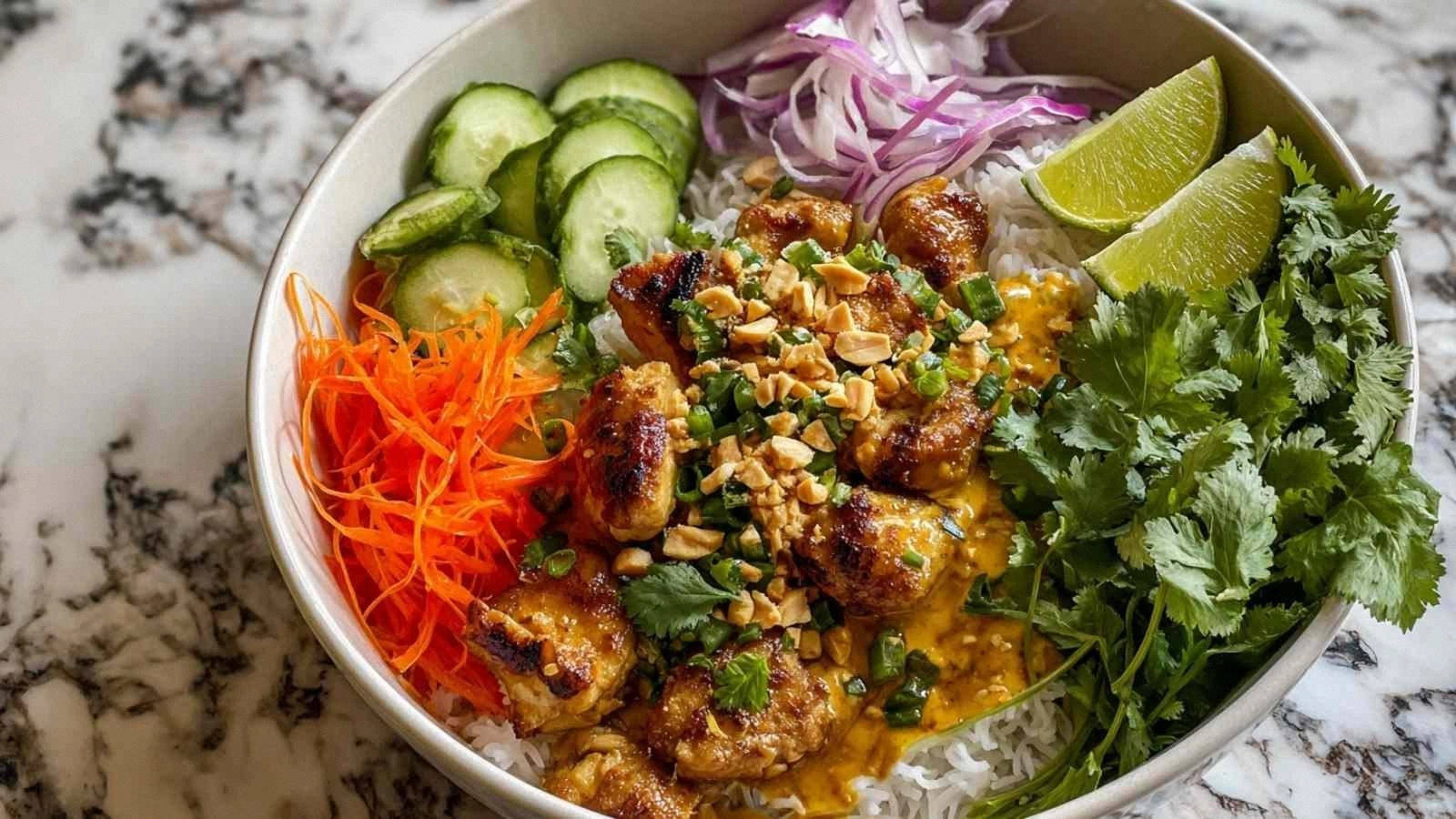
- Visual Appeal: The bowl is a riot of colors—golden chicken, emerald cilantro, ruby red peanuts, and a creamy sauce that glistens, making it Instagram‑ready.
- Audience: Whether you’re feeding a family, a group of friends, or a solo dinner, the portion sizes and flavors adapt easily.
Inside the Ingredient List
The Flavor Base
The foundation of this bowl starts with a robust sauce that marries the earthy tones of coconut milk with the aromatic heat of curry powder. The low-sodium soy sauce adds depth without drowning the other flavors, while the brown sugar or honey brings a gentle sweetness that balances the heat from chili powder and red pepper flakes. If you skip the sugar, the sauce becomes more savory and less rounded, so keep it in the mix. A simple swap is using maple syrup instead of honey for a slightly different sweetness profile, but the texture remains the same.
The Protein Crew
The boneless, skinless chicken thighs are the star of the show. They’re naturally juicy and have a rich flavor that holds up to the intense spices without drying out. If you’re short on time, you can use chicken breasts, but be careful not to overcook them. A quick tip: let the chicken rest for five minutes after cooking to keep it moist. The olive oil is simply a medium to help the spices adhere to the meat; if you prefer a lighter version, you can use a neutral oil like grapeseed.
The Unexpected Star
Fresh cilantro and lime juice are the bright, citrusy counterpoints that cut through the richness of the satay glaze. The cilantro adds a herbal note that lingers on the palate, while the lime juice brings a zesty acidity that lifts the entire dish. If you’re not a fan of cilantro, a sprinkle of fresh mint can give a similar refreshing punch. For those who love a bit of heat, a dash of sriracha or fresh chopped chilies can be added on top.
The Final Flourish
The peanuts add a satisfying crunch and a nutty flavor that complements the satay sauce. Toast them lightly in a dry pan until golden before adding them to the bowl; this brings out their natural oils and adds a depth of flavor. If you’re allergic to peanuts, chopped cashews or almonds work as a great substitute. The final touch is a generous handful of fresh cilantro and a squeeze of lime, which together create a bright, almost tropical finish.
Everything's prepped? Good. Let's get into the real action...
The Method — Step by Step
- Marinate the Chicken: In a bowl, combine the sliced chicken thighs with olive oil, minced garlic, ginger paste, low-sodium soy sauce, yellow curry powder, ground turmeric, ground coriander, chili powder, and a pinch of red pepper flakes. Stir until the chicken is evenly coated. Cover and refrigerate for at least 30 minutes, or overnight if you’re feeling fancy. The longer it marinates, the deeper the flavors will penetrate, turning each bite into a savory explosion.
- Prepare the Satay Sauce: In a saucepan over medium heat, whisk together coconut milk, soy sauce, brown sugar, and a splash of lime juice. Add the remaining curry powder, turmeric, coriander, chili powder, and red pepper flakes. Bring to a gentle simmer, stirring constantly, until the sauce thickens slightly—about 5 minutes. The sauce should smell toasty, with the nutty aroma of coconut mingling with the earthy spices. This step is pure magic; watch the colors deepen as the sauce cooks.
- Cook the Chicken: Heat a large skillet over medium-high heat. Add the marinated chicken and cook for 5-7 minutes on each side, or until the internal temperature reaches 165°F (74°C). The chicken should develop a golden crust, and the edges will start pulling away from the pan, indicating that it’s perfectly seared. Remove from heat and let it rest for 5 minutes before slicing into bite-sized pieces. The rest period is crucial; it allows the juices to redistribute, keeping the meat moist.
- Toast the Peanuts: While the chicken rests, toast the peanuts in a dry skillet over medium heat until they’re golden and fragrant—about 2-3 minutes. Stir constantly to prevent burning. Once toasted, set them aside. Toasted peanuts add a crunch that contrasts beautifully with the tender chicken and silky sauce.
- Assemble the Bowl: Start with a base of fresh greens or shredded cabbage for crunch. Layer the sliced chicken on top, drizzle generously with the satay sauce, and scatter the toasted peanuts. Finish with a handful of chopped cilantro and a squeeze of lime. The visual layers should look vibrant and inviting, each component a distinct color that promises a different bite.
- Final Touches: Gently toss the bowl to ensure the sauce coats each piece of chicken evenly. If you like a bit more heat, sprinkle extra red pepper flakes on top. For a subtle smoky flavor, lightly grill the chicken pieces for an additional minute before serving.
- Serve Immediately: The bowl is best enjoyed hot, straight from the skillet. The contrast between the warm, caramelized chicken and the cool, fresh cilantro will give you that satisfying bite you’re craving. If you’re serving a crowd, keep the bowl warm in a low oven (200°F) until ready to serve.
- Optional Garnish: A drizzle of extra satay sauce, a sprinkle of chopped scallions, or a few slices of fresh jalapeño can elevate the dish further. These additions are optional but can add a layer of complexity that makes the bowl truly unforgettable.
- Enjoy: Take a moment to savor the aroma, the colors, and the textures before you dig in. This bowl is a symphony of flavors that will keep you coming back for more.
Insider Tricks for Flawless Results
The Temperature Rule Nobody Follows
Many cooks overheat the skillet, causing the sauce to burn or the chicken to dry out. The trick is to start at medium-high and then reduce to medium once the chicken is seared. Keep the heat steady and watch the sauce’s color; it should darken slightly but not brown. This subtle shift keeps the flavors intact and prevents any unpleasant bitterness.
Why Your Nose Knows Best
Before you add the final pinch of salt, take a quick sniff of the sauce. If it smells like a toasted nut, it’s ready. If it still smells raw, let it simmer a few more minutes. Your nose is a reliable guide to flavor development and can save you from an under-seasoned bowl.
The 5-Minute Rest That Changes Everything
Resting the chicken after cooking is not just a courtesy—it’s a flavor enhancer. The juices redistribute, preventing the meat from drying out. A quick five-minute rest also allows the spices to settle, giving each bite a balanced taste profile. A friend tried skipping this step once, and the result was a dry, unappetizing chicken that could have been salvaged with a splash of sauce.
Use Fresh Ginger Paste, Not Powder
Fresh ginger paste delivers a bright, sharp flavor that powder can’t match. It also brings a subtle heat that balances the sweetness of the satay sauce. If you only have ginger powder, use half the amount and add a splash of water to rehydrate the flavor. This small tweak can make a big difference in the final taste.
Add a Splash of Water Before Reheating
When reheating leftovers, add a splash of water or coconut milk before microwaving. This steams the chicken and sauce, bringing back the original moisture and preventing the bowl from feeling dry. A quick stir before serving ensures the flavors meld beautifully.
Keep the Peanuts Toasted Fresh
Peanuts lose their crunch if stored for too long. Toast them just before serving or re-toast them in a dry pan for a few minutes. This restores their crispness and brings out their nutty aroma, giving the bowl an extra layer of texture.
Creative Twists and Variations
This recipe is a playground. Here are some of my favorite ways to switch things up:
Veggie‑Rich Bowl
Swap the spring roll wrapper for shredded carrots, sliced bell peppers, and cucumber ribbons. Add a handful of edamame for protein and a sprinkle of sesame seeds for crunch. This version is lighter, colorful, and perfect for a summer lunch.
Spicy Peanut Drizzle
Blend peanut butter, sriracha, lime juice, and a dash of honey to create a spicy drizzle. Drizzle it over the bowl for an extra kick and a creamy texture that pairs beautifully with the satay sauce.
Coconut‑Rice Base
Serve the bowl over a bed of fluffy coconut rice instead of greens. The coconut flavor will echo the satay sauce, creating a cohesive, tropical theme that feels like a vacation in a bowl.
Pesto Twist
Replace the cilantro with fresh basil and add a spoonful of pesto. The herbaceous notes of basil complement the satay sauce, giving the dish a Mediterranean flair that’s surprisingly harmonious.
Breakfast Edition
Add a fried or poached egg on top for a protein-packed breakfast bowl. The runny yolk will mingle with the satay sauce, creating a rich, savory experience that’s both comforting and energizing.
Gluten‑Free Spring Roll Wrapper
Use rice paper or lettuce leaves as a gluten‑free alternative to the spring roll wrapper. They provide a crisp, light texture that still holds the sauce without the heaviness of wheat flour.
Storing and Bringing It Back to Life
Fridge Storage
Store the bowl components separately in airtight containers. The sauce can be kept for up to 3 days in the fridge, while the chicken and peanuts should be stored separately to maintain texture. When ready to eat, reheat the sauce gently on the stovetop and combine it with the chicken and peanuts just before serving.
Freezer Friendly
Freeze the sauce in a freezer‑safe container for up to 2 months. The chicken can also be frozen but should be thawed in the fridge overnight. Reheat the sauce and chicken together, then add fresh peanuts and cilantro for a fresh finish.
Best Reheating Method
To reheat the bowl, add a splash of water or coconut milk to the sauce, then microwave on high for 1-2 minutes. Stir well and serve immediately. This method keeps the chicken moist and the sauce silky, preventing the bowl from feeling dry or soggy.