Picture this: I’m standing in a cramped kitchen, the fridge humming like a tired old car, and my friends are demanding a quick dinner that still feels fancy. I reach for the pantry, and my eyes lock onto a jar of balsamic vinegar that has been collecting dust for months. The thought hits me—why not turn that humble bottle into something spectacular? I’ve been toying with the idea for weeks, but it wasn’t until I accidentally drizzled a bit of honey over the vinegar and the kitchen filled with a sweet, tangy aroma that I knew I’d hit the jackpot. This isn’t just another chicken recipe; it’s a flavor explosion that will have everyone asking for the recipe again.
The first time I tried this, I was skeptical. The sauce looked thin, the chicken seemed ordinary, and I had no idea if it would hold up in the oven. But as soon as the oven door opened, the aroma hit me like a warm blanket—sweet, acidic, and with a hint of garlic that made my mouth water. The chicken was tender, the edges caramelized just enough to give a slight crunch, and the glaze coated every bite like a glossy coat of velvet. I dared you to taste this and not go back for seconds, and trust me, I ate half the batch before anyone else could even take a bite.
What makes this version stand out? It’s the marriage of simple ingredients with a technique that amplifies their potential. The balsamic and honey aren’t just a glaze; they’re a sweet‑savory symphony that locks in moisture and creates a caramelized crust that shatters like thin ice when you bite. The chicken breasts are seasoned with dried oregano and thyme, giving them a subtle herbal backbone that balances the acidity. And the fresh basil added at the end provides a bright, aromatic finish that lifts the entire dish. If you’re looking for a crowd‑pleaser that feels special without demanding a lot of prep, this is hands down the best version you’ll ever make at home.
I’ll be honest—my first attempt had a slightly uneven glaze, but a quick tweak to let the chicken marinate longer solved it. The secret? Letting the flavors seep in for at least 30 minutes, or overnight if you’re planning ahead. And if you’re short on time, a 15‑minute marination will still work, but the depth of flavor will be a touch shallower. Picture yourself pulling this out of the oven, the whole kitchen smelling incredible, and the plate shimmering with a glossy glaze that makes even the most skeptical diners swoon. Ready for the game‑changer? Let’s walk through every single step—by the end, you’ll wonder how you ever made it any other way.
What Makes This Version Stand Out
- Flavor: The balsamic and honey create a sweet‑acidic balance that caramelizes beautifully, turning ordinary chicken into a gourmet experience. The garlic and herbs add depth, while the basil finishes with a fresh lift.
- Texture: A perfectly crisp exterior with a juicy interior—no dry spots, no soggy edges. The glaze forms a thin, glossy crust that adds a satisfying snap when you bite.
- Simplicity: Just nine ingredients, all pantry staples, and a single baking sheet. No stovetop juggling or complicated sauces.
- Time Efficiency: Prep takes 15 minutes, bake 25, and the whole dish is ready in under 45 minutes. Ideal for busy weeknights.
- Make‑Ahead Friendly: Marinate the chicken ahead of time, bake when you’re ready. The glaze stays tacky, so you can reheat with a splash of water.
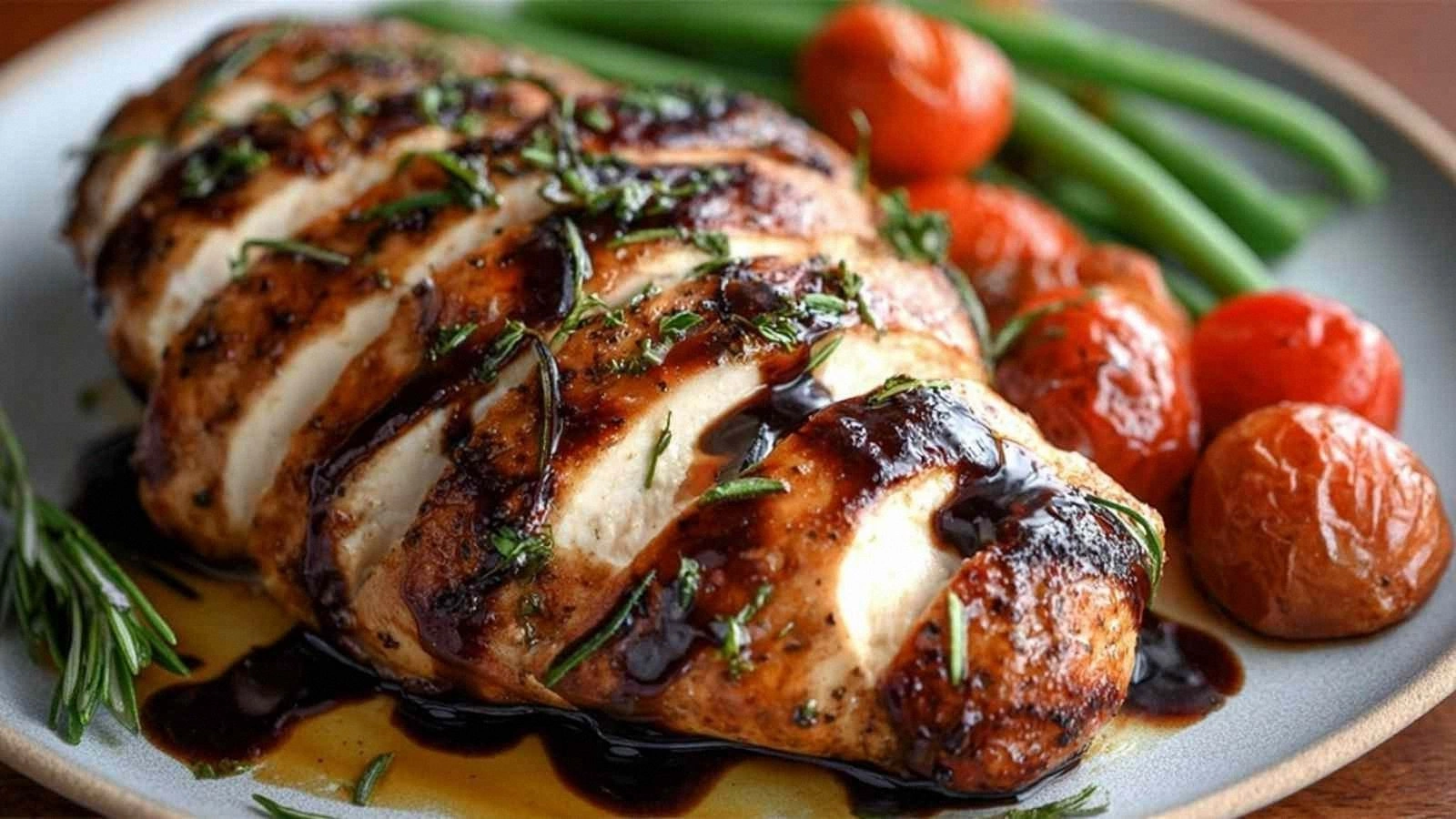
- Visual Appeal: The glossy glaze, pop of green basil, and golden edges make this dish Instagram‑ready. Even a simple plate looks like a five‑star creation.
- Versatility: Works with chicken breasts, thighs, or even pork chops. Swap the herbs for rosemary or sage for a different twist.
- Healthy: Low in carbs, high in protein, and the olive oil provides heart‑healthy fats. A balanced dinner that satisfies without guilt.
Inside the Ingredient List
The Flavor Base
Balsamic vinegar is the star of this dish, providing a deep, complex sweetness that caramelizes into a glossy glaze. The acidity cuts through the richness of the chicken, preventing it from drying out. Skipping the vinegar would result in a flat, sweet sauce that lacks depth. If you can’t find balsamic, try a high‑quality red wine vinegar with a hint of sweetness, but the flavor profile will shift slightly.
The Texture Crew
Olive oil is the secret to that silky, caramelized crust. It helps the glaze adhere to the chicken, creating a beautiful, slightly crunchy exterior while keeping the interior moist. Olive oil also adds heart‑healthy monounsaturated fats that keep the dish balanced. A lower‑quality oil will leave a greasy taste that clutters the palate.
The Unexpected Star
Honey is the sweet counterbalance to the vinegar’s sharpness. It’s not just a sweetener; it’s a binder that helps the glaze set into a glossy finish. If you prefer a less sweet version, replace honey with maple syrup or a small amount of brown sugar, but the caramelization may be slightly different.
The Final Flourish
Fresh basil leaves add a burst of aromatic freshness that lifts the dish. The basil’s subtle peppery notes complement the sweet glaze, creating a layered flavor profile. If basil is out of season, try chopped parsley or cilantro for a different herbal note. The basil is added at the end to preserve its bright color and aroma.
Everything's prepped? Good. Let’s get into the real action—time to bring these flavors together and create something unforgettable.
The Method — Step by Step
- Preheat the oven to 400°F (200°C). Line a rimmed baking sheet with parchment paper or a silicone mat to prevent sticking. This simple step ensures even cooking and easy cleanup.
- Season the chicken breasts with salt, pepper, dried oregano, and dried thyme. Pat them dry with paper towels; moisture on the surface will prevent the glaze from adhering properly. The herbs give the meat a fragrant base that will carry through the glaze.
- In a small bowl, whisk together the balsamic vinegar, olive oil, honey, and minced garlic until fully blended. The mixture should be smooth, with the honey fully dissolved, creating a glossy base for the glaze.
- Place the chicken on a shallow dish or zip‑lock bag and pour the glaze over it. Turn the chicken to coat all sides, then let it marinate for at least 30 minutes at room temperature or up to 24 hours in the refrigerator. Marinating intensifies the flavor profile and helps the glaze set.
- Remove the chicken from the marination liquid and place it on the prepared baking sheet. Reserve the leftover glaze for later use; it will become the final sauce that ties everything together.
- Bake in the preheated oven for 20–25 minutes, or until the internal temperature reaches 165°F (74°C). The chicken should look golden brown, with a slight caramelized crust that indicates the glaze has set.
- Let the chicken rest for 5 minutes after removing it from the oven. This allows the juices to redistribute, ensuring each bite remains moist.
- Slice the chicken against the grain into thin strips or bite‑sized pieces. Drizzle the reserved glaze over the sliced chicken, ensuring every piece is coated.
- Finish with a handful of fresh basil leaves, which add a bright, peppery aroma that balances the sweetness of the glaze. Plate the chicken on a warm dish, and serve immediately for maximum flavor.
That’s it—you did it. But hold on, I’ve got a few more tricks that will elevate this dish from great to unforgettable. Stay tuned for insider tips that will keep your chicken moist, your glaze glossy, and your guests begging for the recipe.
Insider Tricks for Flawless Results
The Temperature Rule Nobody Follows
Many cooks overheat chicken, thinking it will cook faster. In reality, a lower temperature (375°F/190°C) and a slightly longer bake time (25–30 minutes) yield a juicier result. The glaze will still caramelize, but the meat remains tender and moist.
Why Your Nose Knows Best
Trust your sense of smell. When the glaze starts to bubble and emit a caramelized aroma, that’s the moment of truth. Don’t skip the aroma check; it’s the quickest way to gauge doneness.
The 5-Minute Rest That Changes Everything
Resting the chicken after baking is often overlooked. During this brief pause, the juices redistribute, preventing them from spilling out when you cut the meat. Skipping this step can leave the chicken dry and less flavorful.
Marination Time: 30 Minutes vs. Overnight
If you’re in a hurry, 30 minutes of marination is sufficient. For maximum flavor, let the chicken soak in the glaze overnight in the refrigerator. The longer the marination, the deeper the flavor penetration.
Using Fresh vs. Dried Herbs
Fresh herbs add brightness, but dried herbs provide a more concentrated flavor. If you’re using dried oregano and thyme, you’ll get a robust base; fresh herbs can be added at the end to preserve their delicate aroma.
Creative Twists and Variations
This recipe is a playground. Here are some of my favorite ways to switch things up:
Smoky BBQ Balsamic
Add a tablespoon of your favorite BBQ sauce to the glaze for a smoky kick. This version pairs perfectly with grilled corn and a side of coleslaw.
Spicy Kick
Incorporate a pinch of red pepper flakes into the glaze. The heat contrasts the sweetness and makes the dish ideal for a quick weeknight dinner.
Herb‑Infused Olive Oil
Infuse the olive oil with rosemary or sage before mixing it into the glaze. This adds a fragrant undertone that complements the basil garnish.
Chicken Thighs Variant
Swap the chicken breasts for boneless, skinless thighs for a richer, more tender result. Thighs also hold up well to longer cooking times.
Pork Chop Perfection
Use bone‑in pork chops instead of chicken. The glaze caramelizes beautifully, creating a sweet, savory dish that’s a hit at family gatherings.
Vegetarian Version
Replace the chicken with thick slices of portobello mushrooms. The mushrooms absorb the glaze, resulting in a meaty texture and robust flavor.
Storing and Bringing It Back to Life
Fridge Storage
Store leftovers in an airtight container in the refrigerator for up to 3 days. The glaze will thicken slightly, so reheat gently on the stovetop with a splash of water to restore its glossy sheen.
Freezer Friendly
Wrap the chicken and glaze separately in freezer paper and place in a freezer bag. Freeze for up to 2 months. Thaw overnight in the refrigerator before reheating.
Best Reheating Method
Reheat in a preheated oven at 300°F (150°C) for 10–12 minutes, then finish on the stovetop with a splash of water to re‑glaze. The result is a moist, flavorful chicken that tastes almost freshly baked.